
REVIEW · NAMIBIA OVERLAND CAMPING SAFARIS
12 Day Classic Namibia Camping Safari
Big wildlife and big deserts, in one circuit. This 12-day Namibia loop strings together Etosha waterholes, Sossusvlei dunes, Skeleton Coast shipwreck stops, and a Himba village visit, plus a final night under Quiver trees.
I love the hands-on wildlife and conservation feel, starting with rhino work at Mount Etjo and then moving into Etosha’s waterhole rhythm. I also love the practical camping setup, with guide-cooked dinners over an open fire and a max group size of 10, so the trip feels personal, not packed.
One thing to consider is comfort planning. Camping equipment is included except the sleeping bag, and with multiple early mornings plus long drive days, you’ll want to be ready for a no-frills routine, plus drinks are not included.
In This Review
- Key highlights worth circling
- What This Namibia Safari Really Feels Like (And Why It’s a Good Value)
- Day 1: Windhoek Meets the Road, Plus Woodcarving Stop
- Days 2 to 4: Etosha National Park, Waterholes, and the Floodlit Night Magic
- Otjikandero Himba Orphan Village and Palmwag: Culture and Desert Elephants
- Day 5: The Skeleton Coast Lead-In, Shipwreck Country, and Cape Cross Camp
- Day 6: Cape fur seals, the Zeila shipwreck, and Swakopmund’s Optional Fun
- Day 7: Dunes to Solitaire, Crossing the Tropic of Capricorn, and Sesriem Camp
- Day 8: Dune 45 Sunrise, Sossusvlei Walking, and Deadvlei’s Strange Silence
- Day 9: Namib Rand to Klein Aus, Hiking Trails, and a Sunset Camp
- Day 10: Kolmanskop Ghost Town, Luderitz, Diaz Point, and Wild Horses
- Day 11: Fish River Canyon Hell’s Bend and Quiver Tree Forest for Night-Sky Fans
- Day 12: Quiver Trees at Sunrise and the Drive Back to Windhoek
- Guides, Group Size, and Camp Comfort: What to Expect Day to Day
- What you should pack
- Should You Book This Namibia Camping Safari?
Key highlights worth circling
- Rhino conservation at Mount Etjo with a game drive focused on the work of the Mount Etjo Rhino Trust
- Etosha waterholes by day and by floodlights, with sunset-to-dark wildlife viewing at Okaukuejo
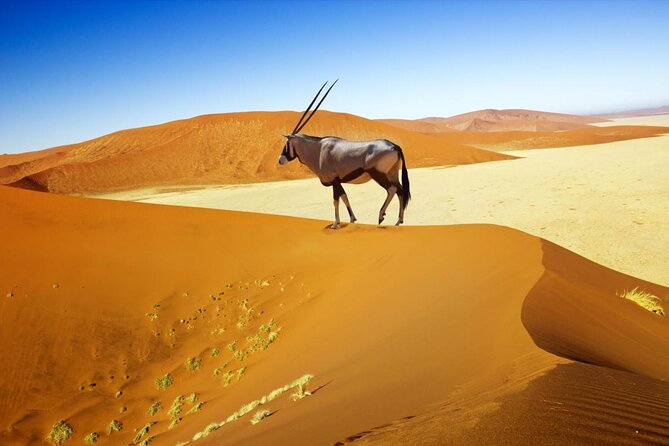
- Iconic Namib Desert stops: Dune 45 at sunrise, Sossusvlei on foot, and Deadvlei’s eerie clay pan
- Skeleton Coast sensory time at Cape Cross, including the Cape fur seal colony
- Culture and questions answered at the Otjikandero Himba Orphan Village visit
- Big-end scenery in small doses: Kolmanskop ghost town, Fish River Canyon lookout, and Quiver Tree Forest sunrise
Longer camping runs that link the same stops
What This Namibia Safari Really Feels Like (And Why It’s a Good Value)
This is a classic “greatest hits” Namibia camping safari, but it doesn’t feel like a rushed checklist. You get long, dramatic regions in full context: salt pan wildlife in Etosha, foggy Skeleton Coast coastline at Cape Cross, and desert color that shifts as the day heats up and cools down.
The value comes from how much you get included for the price. You’re paying about $3,071.21 per person for 12 days with 10 nights camping plus 1 night accommodation, plus breakfast (11), lunch (11), and dinner (10). Camping gear is included too, except for the sleeping bag, which is a big cost saver if you’re traveling light.
It also matters that the group stays small, with a maximum of 10 travelers. On safaris, that usually means easier logistics at camps and less time waiting around for the whole group to get moving.
Day 1: Windhoek Meets the Road, Plus Woodcarving Stop
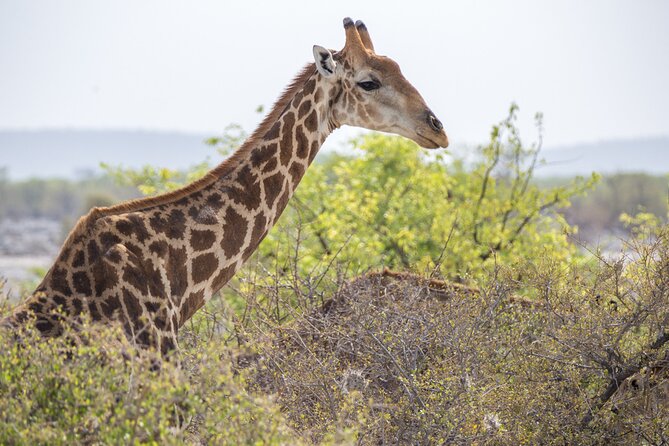
You start in Windhoek at Chameleon Safaris (meeting point: Ferry Street) with a 7:00 am departure. The first stop, Chameleon Safaris, is mainly about getting oriented, then you’re out into the Namibian road rhythm fast.
A quick stop at the Okahandja Mbangura Woodcarvers Craft Market is one of those chances to do something human before the wildlife. You can browse and support local artisans, and it’s set up for a bit of bargaining, which is part of the experience rather than an awkward tourist task.
Then you head to Mount Etjo Game Reserve, where the focus starts with conservation. Mount Etjo’s mission is tied to protecting Namibia’s black and white rhinos, and in the afternoon you’ll do a reserve game drive to look for rhinos connected to that work, then watch a Namibian sunset in a landscape that’s already doing its job as a warm-up act.
Practical note: you’re aiming to arrive at camp before lunch, then you set up camp and get right into activities. If you like a trip that has motion from the start, you’ll enjoy this.
Days 2 to 4: Etosha National Park, Waterholes, and the Floodlit Night Magic
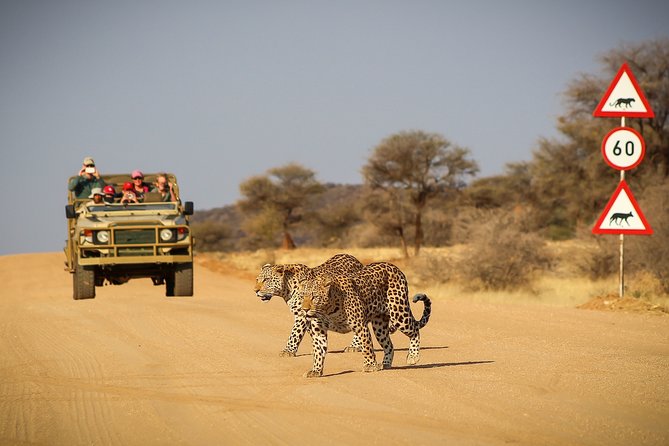
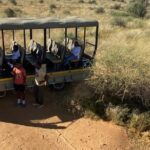
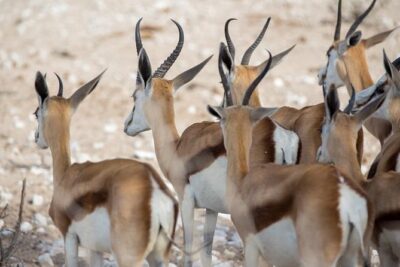
Etosha is the anchor of this safari, and you feel it immediately once you enter the park. You start with a drive through to Okaukuejo, where you set up camp and enjoy lunch before another afternoon game drive. The core Etosha pattern is simple and powerful: predators and plains game often cluster around water, so drives move from waterhole to waterhole with that goal in mind.
One of the best perks here is the floodlit waterhole visit at night while dinner is cooking. You’re not stuck on the road, waiting for random luck, because the park makes wildlife viewing more consistent through lighting and the draw of water. That’s also one of the moments where your guide’s timing matters, since you’re positioned to catch animals as evening rolls in.
Day 3 is your big Etosha “morning mode.” You’ll start at sunrise for a predator-focused drive, then you can step out at the Etosha Pan, described as a large saline desert area. Breakfast at a fenced picnic spot inside the park is a nice balance, because it gives you a protected moment before you continue chasing sightings. After that, you move toward Halali for lunch and a dip or pool time, then you loop back toward Okaukuejo for sunset.
Day 4 adds two things that make Etosha more than just animals. First, you do another early morning and exit drive, then you shift to culture with a stop at Otjikandero Himba Orphan Village.
Other safari runs we have written up
- 6-Day Dunes and Wildlife Accommodated Safari from Windhoek
★ 5.0 · 123 reviews - 9 Day Etosha, Skeleton Coast and Sossusvlei Camping and Lodge Safari
★ 5.0 · 21 reviews - From Windhoek: Okapuka Safari Lodge Day Trip
★ 4.4 · 20 reviews - 7 Day Northern Namibia and Skeleton Coast Camping Safari
★ 5.0 · 19 reviews - 7 Day Taste of Namibia Lodging Safari
★ 5.0 · 13 reviews
Otjikandero Himba Orphan Village and Palmwag: Culture and Desert Elephants
The visit to the Otjikandero Himba Orphan Village is a change of pace that’s still on-theme. You get a guided tour around the village, with the chance to learn about Himba traditions and meet people, plus share a bit of your own culture. This is one of those stops that can stick with you, because it’s not built around props or staged photo moments, it’s built around conversation and community life.
After the village, you head to Palmwag, where the vibe shifts into desert country and you’re set up for a relaxed afternoon while watching for desert elephants. Evening at camp often brings better sightings than you expect, so even the “leisure time” here isn’t wasted time.
If you’re the type who likes to slow down between big drives, Palmwag is a good mid-trip breather.
Day 5: The Skeleton Coast Lead-In, Shipwreck Country, and Cape Cross Camp
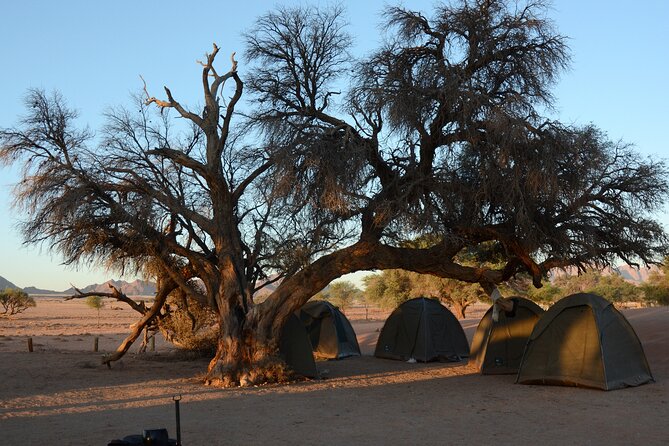
From Palmwag, the route pushes west toward the Atlantic and the Skeleton Coast. This is one of Namibia’s more hostile coastlines, and that detail matters. Fog, rough seas, and unpredictable conditions helped make shipwrecks common, which is why you’ll hear about the Skeleton Coast as shipwreck country rather than just beach country.
After a long travel day, you arrive at Cape Cross mid-afternoon and set up camp. You get time to walk the beach and decide whether you want a dip in the Atlantic. Even if you skip swimming, you’ll still get that strong coastal feel, then dinner is prepared by your guide over an open fire.
This is also a day where you can start understanding Namibia’s distances. Even when you don’t do a “big activity,” the coast still changes your mood.
Day 6: Cape fur seals, the Zeila shipwreck, and Swakopmund’s Optional Fun
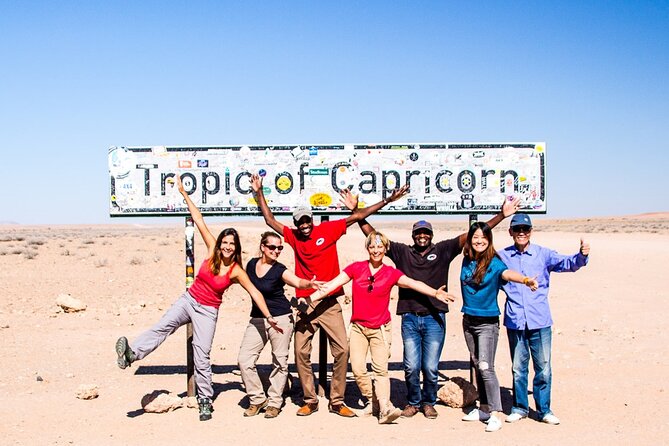
You start early and visit the Cape Cross Seal Reserve, where the colony can be enormous during breeding season, with numbers noted as up to 200,000-plus seals in November and December. Even outside peak timing, you’re in a place where the sheer scale of animals changes how the beach feels. Smell, sound, and movement all hit at once.
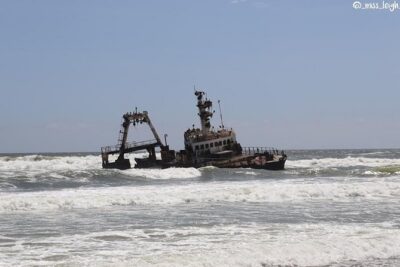
Then you continue down the coast, stopping for the Zeila Shipwreck, listed as a victim as recent as 2007. It’s a quick stop, but it gives Skeleton Coast context beyond generalities.
In the afternoon you reach Swakopmund, and this is your planned break from camping. You have time to explore on foot or choose optional adrenaline activities. The tour lists options like skydiving and quad biking, and meals here are at your own expense. Your guide will recommend and help with booking depending on what you want to do.
This is a good day to reset. If you want a cleaner bed and a meal off-site, Swakopmund gives you that without breaking the safari flow.
Day 7: Dunes to Solitaire, Crossing the Tropic of Capricorn, and Sesriem Camp
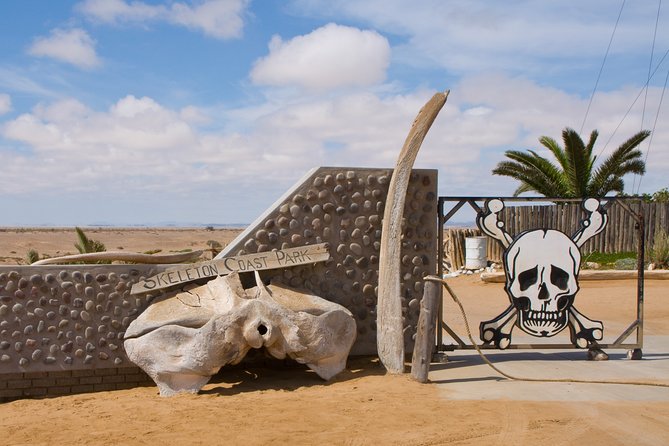
You leave Swakopmund at 11:30, so you either get a more relaxed morning or you chase one last optional activity. The plan specifically mentions sandboarding down a dune head first style, with speeds described as around 60 km/h, plus quad biking in the dune fields.
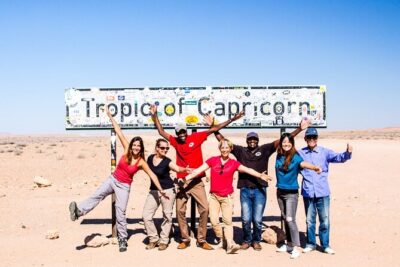
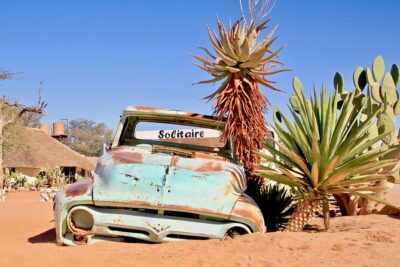
Then you drive through the Namib Desert via Kuiseb Pass, crossing the Tropic of Capricorn. A stop at Solitaire is built in for a snack and leg stretch. You’re not just driving through emptiness, you’re using those tiny breaks to keep the trip enjoyable.
Late afternoon you arrive at Sesriem camp with sunset over the desert in view. There’s a pool and bar mentioned, then dinner is again prepared by the guide over an open fire. Early night is recommended, and honestly, that advice is practical here. Tomorrow is your dune day.
Day 8: Dune 45 Sunrise, Sossusvlei Walking, and Deadvlei’s Strange Silence
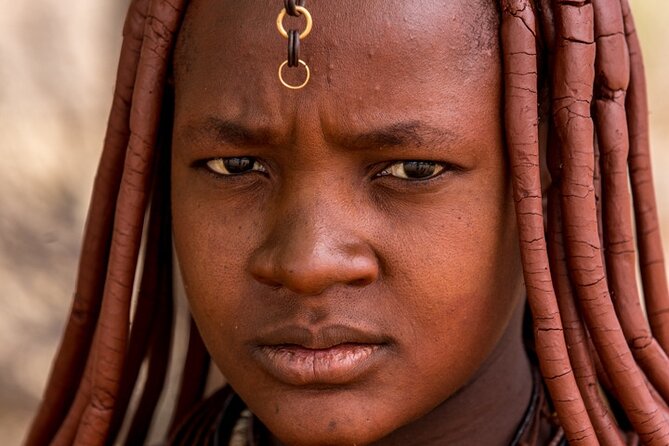
This is one of the days that makes people remember the whole safari. You depart pre-dawn to reach dunes when the light is soft and the colors start doing their work.
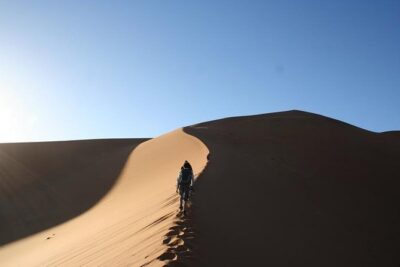
First stop is Dune 45. You get the chance to climb to the top for sunrise. It’s worth knowing that climbing dunes is tiring in a specific way, because sand is never truly cooperative. If you take it slow, you’ll still earn that view.
After descending, you recharge with breakfast. Then you move into the Sossusvlei area and explore on foot. The walking time is where you start feeling scale, because you’re not only looking from a vehicle.
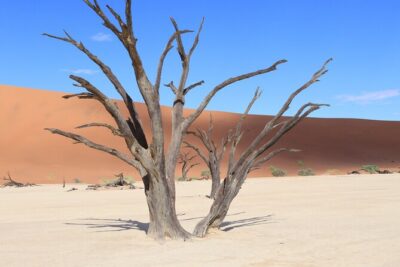
Next is Deadvlei, with bleached, cracked clay and skeletal camel thorn trees against giant dune backdrops. Even without a “thrill activity,” this stop does something: it makes you understand how Namibia looks when water once existed, then vanished.
You return to Sesriem around lunch for heat-time downtime, then later you visit Sesriem Canyon, described as a must-see. It’s a smaller, more focused geology moment after all the big dune scale.
Day 9: Namib Rand to Klein Aus, Hiking Trails, and a Sunset Camp
You pack up Sesriem and have a more leisurely start, then travel south into the Namib Rand Nature Reserve. Your destination is Klein Aus in the Gondwana Sperrgebiet Rand Park.
Camp arrives late afternoon, and the plan gives you time to enjoy some short hiking trails. You also get a sunset and dinner prepared by the guide over an open fire. This is a more relaxed day compared with the day before, and it helps you avoid the “all signal, no pause” feeling that long safaris can cause.
If you like photography, pay attention to timing. Early and late light tends to be when deserts look most alive.
Day 10: Kolmanskop Ghost Town, Luderitz, Diaz Point, and Wild Horses
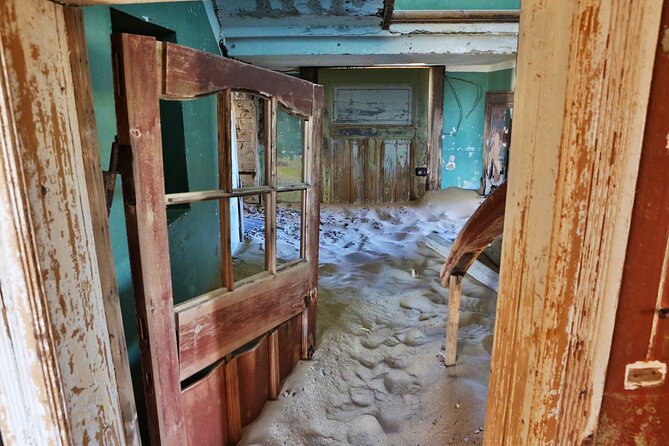
After breakfast, you head to Kolmanskop Ghost Town, about 15 km outside of Luderitz. It surged during the 1910 diamond boom, and the town is described with unusual details like a bowling alley and luxury housing, plus the southern hemisphere’s first X-ray machine. When the boom ended, it was abandoned and became what it is today, half-buried and decayed.
You then continue to Luderitz, with time to wander its rocky Atlantic shoreline and colonial-style buildings. Next is a stop at Diaz Point (1488), tied to the Original Diaz Cross.
On the return to Aus, you keep your eyes peeled for wild horses of the Namib Desert between Luderitz and Klein Aus. The tour notes that their origin is still a mystery, which is part of the fascination. Even if sightings are hit or miss, the spot is worth it for the search alone, because the area is built for “wait and watch” travel.
You finish back at camp late mid-afternoon with another sunset and a guide-prepared dinner.
Day 11: Fish River Canyon Hell’s Bend and Quiver Tree Forest for Night-Sky Fans
You start early and head east toward one of Namibia’s most famous viewpoints, the Fish River Canyon at Hell’s Bend. The view is framed as the second largest canyon in the world, shaped over millions of years by water erosion and geologic movements. This is a viewpoint day, not a hike day, which is a good match if you want the drama without adding physical strain.
After lunch, you drive to Quiver Tree Forest Rest Camp, set north-east of Keetmanshoop. You’ll find about 250 quiver trees, described as the oldest around 200 to 300 years. Quiver trees, also called kokerboom, are Namibia’s national tree, and this forest is noted as a national monument declared in 1995.
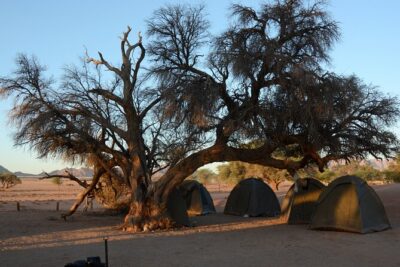
Your last night includes camping under the stars with meals prepared by your guide. If you’re into night photography, the tour notes that permits are not included for night photography, but you’ll still have the location and timing to work with.
Day 12: Quiver Trees at Sunrise and the Drive Back to Windhoek
On your final day, you explore Quiver trees at sunrise, then take the long drive back to Windhoek with a picnic-style lunch en route. You pass through towns mentioned as Mariental and Rehoboth, then arrive in Windhoek late afternoon, with drop-off at your accommodation.
Flights are not recommended on this day. That’s a helpful heads-up, because the driving time is part of the reason this itinerary is doable without constant rush.
Guides, Group Size, and Camp Comfort: What to Expect Day to Day
This safari runs with a small group, up to 10 travelers. That matters because camping trips can get noisy and chaotic when groups are bigger, but here you usually have room to breathe, plus faster movement at key stops.
Food is also a consistent part of the experience. You get breakfast, lunch, and dinner included on the schedule, and dinner is repeatedly described as cooked by the guide over an open fire. The included meals are one of the best time-savers on a road trip like this, because you’re not making constant decisions about where to eat.
From past experience shared with the tour, the guides Tulimo and Gregory are highlighted as excellent, including as chefs. That lines up with what you want in a camping safari, because a good guide makes the day feel smoother, not just “informational.”
What you should pack
Based on what’s included and what’s not, plan for:
- a sleeping bag (not included)
- sun protection, because dune and pan days can be intense
- warm layers for early starts, especially when you’re leaving camp before sunrise
- drinks money, since drinks including mineral water, soft drinks, and alcohol are not included
If you’re expecting hotel-like comfort, this is a camping adventure, so you’ll want to match your expectations accordingly.
Should You Book This Namibia Camping Safari?
Book it if you want a true Namibia highlights route and you’re okay with camping basics in exchange for big variety: Etosha wildlife, Skeleton Coast seals, Sossusvlei dunes, Kolmanskop, Fish River Canyon, and Quiver trees.
You should also book it if you like structured days with enough flexibility to breathe. Swakopmund gives you optional adrenaline choices and a meal out, while the Namib Desert days balance intense sights with downtime at camp.
Skip or rethink it if sleeping comfort matters a lot, because you need to bring your own sleeping bag and you’ll have early starts on key days. Also, this is a non-refundable experience, so make sure your dates are solid before you commit.
If you want a safari that feels like Namibia, not just Namibia from a bus window, this 12-day camping loop is a strong pick.
Safaris We Have Been On
- 6-Day Dunes and Wildlife Accommodated Safari from Windhoek★ 5.0 · 123 reviews
- 3 Day Sossusvlei Budget Camping Safari★ 5.0 · 62 reviews
- 6 Day Sand, Sea & Etosha Budget Camping Safari★ 5.0 · 36 reviews
- 7 Day Southern Namibia and Sossusvlei Camping Safari★ 5.0 · 26 reviews
- 9 Day Canyons, Dunes & Wildlife Camping and Lodge Safari★ 4.5 · 23 reviews
More Namibia Reviews
- Windhoek: City and Township Tour★ 4.8 · 430 reviews
- Half-Day Windhoek City and Township Cultural Tour★ 4.5 · 187 reviews
- Windhoek: Bushman Walk with the San★ 4.9 · 145 reviews
- 6-Day Dunes and Wildlife Accommodated Safari from Windhoek★ 5.0 · 123 reviews
- Windhoek City Tour★ 5.0 · 113 reviews
Camping the Country, More Itineraries
- 3 Day Sossusvlei Budget Camping Safari★ 5.0 · 62 reviews
- 6 Day Sand, Sea & Etosha Budget Camping Safari★ 5.0 · 36 reviews
- 7 Day Southern Namibia and Sossusvlei Camping Safari★ 5.0 · 26 reviews
- 9 Day Canyons, Dunes & Wildlife Camping and Lodge Safari★ 4.5 · 23 reviews
- 9 Day Etosha, Skeleton Coast and Sossusvlei Camping and Lodge Safari★ 5.0 · 21 reviews
Other Namibia trips from our own write-ups


Namibia Overland Camping Safaris, all of them.
 ★ 5.03 Day Sossusvlei Budget Camping SafariFrom $63262 reviews
 ★ 5.03 Day Etosha Budget Camping SafariFrom $63437 reviews
 ★ 5.06 Day Sand, Sea & Etosha Budget Camping SafariFrom $1,35536 reviews
 ★ 5.07 Day Southern Namibia and Sossusvlei Camping SafariFrom $1,84626 reviews
 ★ 4.59 Day Canyons, Dunes & Wildlife Camping and Lodge SafariFrom $2,56823 reviews
 ★ 5.09 Day Etosha, Skeleton Coast and Sossusvlei Camping and Lodge SafariFrom $2,56821 reviews
 ★ 5.07 Day Northern Namibia and Skeleton Coast Camping SafariFrom $1,84619 reviews
 ★ 4.53 Day Sossusvlei Camping Schedule and Sandwich HaborFrom $09 reviews
This tour also turns up in