
REVIEW · SOSSUSVLEI & THE RED DUNES
9 Day Etosha, Skeleton Coast and Sossusvlei Camping and Lodge Safari
Namibia’s big hits, packed into nine days. You’ll cover Etosha wildlife country, the Skeleton Coast with its shipwreck history, and the high-drama dunes of Sossusvlei, plus Himba culture stops along the way. It’s a smart way to see Namibia’s range without getting stuck in logistics hell.
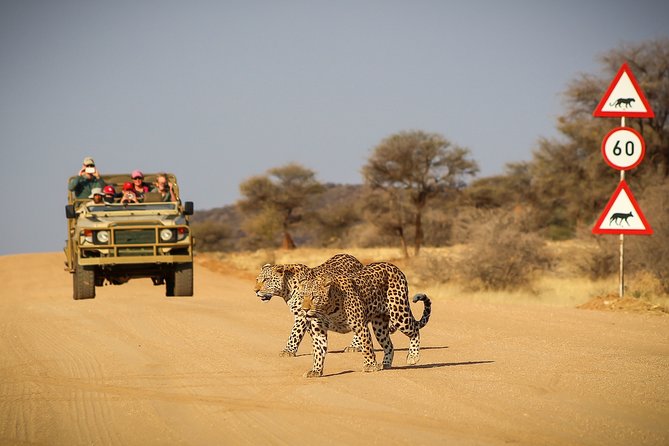
I love the pop-up roof safari vehicle approach because it makes waterhole viewing feel more natural, not just “looking out a window.” I also love how often the trip switches settings, from Etosha’s fenced picnic stops to the Atlantic edge at Cape Cross, so the days never blur together.
The main drawback is that you do real camping for a good chunk of the trip, and a sleeping bag is not included. If you’re new to camping, that’s the one item I’d handle early.
In This Review
- Key highlights worth planning around
- Why this 9-day Namibia route works
- Day 1 in Namibia: Windhoek pickup, Okahandja crafts, and Mount Etjo rhino country
- Etosha on wheels: Okaukuejo camps, waterholes, and floodlit night viewing
- Day 3’s sunrise Etosha Pan and the move toward Halali and back again
- Leaving Etosha: Otjikandero Himba village exchange and Palmwag desert-elephant potential
- Skeleton Coast to Cape Cross seals, then Swakopmund for optional adrenaline
- Day 7: Sandboarding options, Tropic of Capricorn photos, and the drive into Desert Camp
- Day 8 is Sossusvlei day: Deadvlei, brunch in Sossusvlei, Dune 45 photos, and Sesriem Canyon
- Day 9: cheetah learning at Solitaire, then back to Windhoek
- Camping and lodge mix: what’s included, what to bring, and what to expect at camp
- Wildlife time strategy: how this schedule helps you actually see animals
- Food on the road: why camp meals are part of the value here
- Price and value: what your $2,568 buys you
- Who this tour suits, and who might want a different fit
- Should you book this Namibia safari?
- FAQ
- What time and where does the tour start?
- Is pickup included?
- How many travelers are in a group?
- Do I need to bring my own camping sleeping bag?
- What camping gear is provided?
- How much of the trip is camping versus lodge accommodation?
- Are meals included?
- What wildlife and nature stops are included?
- Are there optional activities?
- What if I cancel?
Key highlights worth planning around
- Etosha waterhole game drives, including a visit to a floodlit waterhole for night-life viewing
- Mount Etjo rhino conservation drives, aimed at supporting black and white rhinos
- Otjikandero Himba Orphan Village experience, with cultural exchange included
- Cape Cross Seal Reserve at one of the world’s largest Cape fur seal breeding colonies
- A full Sossusvlei region day, including Deadvlei and a stop for photos at Dune 45
- Small groups (max 10), which helps the guide keep the pace manageable
Other runs north to Cape Cross and the wreck coast
Why this 9-day Namibia route works
This tour strings together Namibia’s most famous “wow” zones into one logical run: Etosha first for wildlife focus, Skeleton Coast for a moody Atlantic vibe, then Sossusvlei for the dune and clay-pan scenery that looks otherworldly. The pacing also matters. You’re not trying to sprint through everything at once. Instead, you get sunrise wildlife time, full daylight travel days, and longer stops where they count.
It also balances road time with meaningful activities. You’re not just passing through towns for photos. You stop for craft shopping at Okahandja, you visit an active rhino conservation reserve at Mount Etjo, and you spend a dedicated block in the Sossusvlei region.
Finally, the camping and lodge mix is a practical win for most travelers. You get the classic Namibia camping feeling, but you’re not camping every night.
Day 1 in Namibia: Windhoek pickup, Okahandja crafts, and Mount Etjo rhino country
You meet up in Windhoek at Chameleon Backpackers before heading out. Then you stop briefly at the Okahandja Mbangura Woodcarvers Craft Market, where woodcarvers from around Namibia sell their work. It’s one of the easiest ways to start understanding the country, since you’re not just consuming scenery, you’re meeting people and supporting local craft.
Later, you reach Mount Etjo Game Reserve, tied to conservation work through the Mount Etjo Rhino Trust. The reserve isn’t just a backdrop. You’re scheduled for an afternoon game drive in search of the rhinos the trust supports, and you end that drive with a Namibian sunset moment from the reserve.
Practical note: you’re aiming to arrive at camp before lunch, then you shift into your afternoon activity. That structure helps if you want an early start without feeling rushed.
Etosha on wheels: Okaukuejo camps, waterholes, and floodlit night viewing
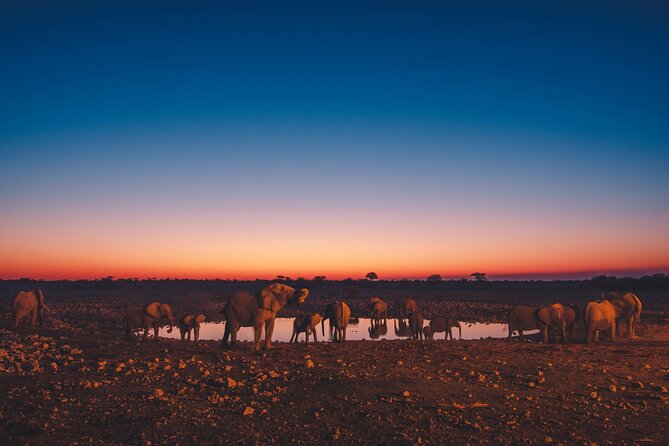
Etosha is the wildlife heart of this trip, and you ease into it with an on-ramp stop in Otjiwarongo for fresh supplies. Once you enter Etosha National Park, you start searching for wildlife right away.
You head to Okaukuejo, set up camp, and enjoy a lunch before your afternoon game drive. Etosha’s viewing rhythm is built around waterholes, so you’re not only “hoping for lions in the grass.” Your drives move from waterhole to waterhole to look for predators, plains game, birds, and sometimes reptiles.
Then comes one of the most memorable on-the-road “Etosha-only” moments: after dinner is cooking, you can visit the excellent floodlit waterhole. The schedule is set up so you can see animals come in at night, including rhino, elephant, giraffe, lion, and hyena.
Why this works for you: Etosha is most rewarding when you accept that wildlife is seasonal and timing-based. These drives are designed to put you at the right places at the right times.
Other ways to reach Sossusvlei and stand on the red sand
- 3 Day Sossusvlei Budget Camping Safari
★ 5.0 · 62 reviews - 7 Day Southern Namibia and Sossusvlei Camping Safari
★ 5.0 · 26 reviews - 4-Day Swakopmund And Sossusvlei Accommodated Adventure from Windhoek
★ 4.5 · 21 reviews - 5-Day Sossusvlei & Sandwich Harbour Photography Tour
★ 5.0 · 13 reviews - 3 Days Amazing Red Dunes of Sossusvlei | Private Guided Tour
★ 5.0 · 10 reviews
Day 3’s sunrise Etosha Pan and the move toward Halali and back again
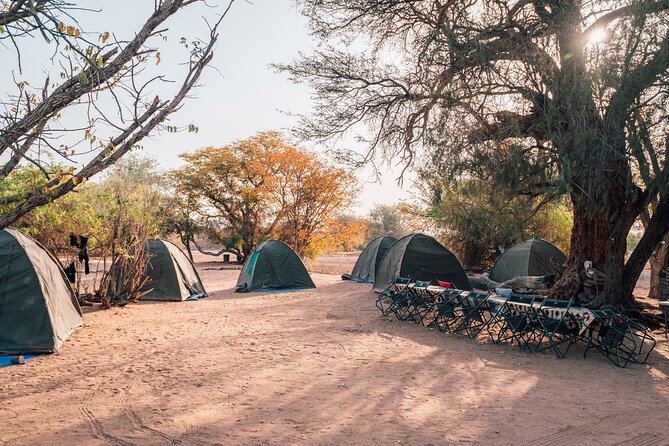
You start at sunrise for your first game drive of the day. The goal here is simple: catch predators while they’re still active and build your sightings while the light is at its best.
Breakfast is planned inside the park at one of the fenced picnic spots, which is a nice break from constant driving. After breakfast, you travel to the Etosha Pan area, described as a massive “saline desert” (4,500 square kilometers). You even have time to get out of the vehicle and experience it for yourself before continuing the search for Big Four species.
After that big morning, the day shifts tone. You move across the park toward Halali, including time at Moringa Waterhole, plus lunch. At Halali, you get the chance to enjoy the pool and visit the waterhole, which is a welcome reset after early driving.
Then you return toward Okaukuejo for your last night camping in Etosha, arriving by sunset. This day is a good reminder that Etosha isn’t just about the animals. It’s also about how the park’s open salt pan country changes the feel of every drive.
Leaving Etosha: Otjikandero Himba village exchange and Palmwag desert-elephant potential
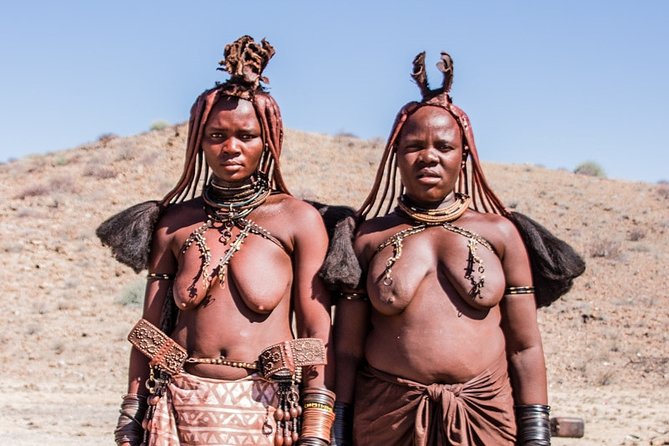
On your final morning in Etosha, you take in a sunrise breakfast and a final game drive as you exit the park. Then you switch from wildlife to culture with a stop at Otjikandero Himba Orphan Village.
This is one of the more meaningful stops because it’s not just “take photos and move on.” You get a guided tour around the village, and you’ll learn about Himba traditions and daily life while also having a chance to share a little of your own culture with the group.
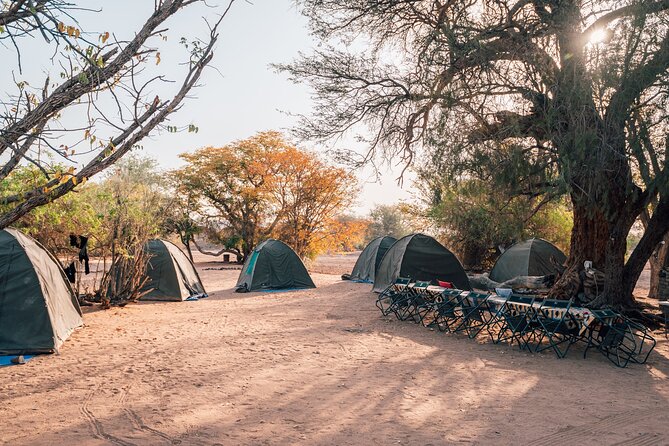
After that, you travel to Palmwag Campsite. Once you set up camp, you relax, and if you’re lucky you might spot desert elephants. Dinner is prepared by the guide over an open fire, which keeps the trip’s camping vibe consistent.
The practical side here: this is a change of pace day. If you get impatient with slow, human-centered activities, plan to approach it with time in mind.
Skeleton Coast to Cape Cross seals, then Swakopmund for optional adrenaline
Today you push west toward the Atlantic Ocean and enter Skeleton Coast National Park, which is described as hostile but fascinating due to thick fog, unpredictable currents, and rough seas that have caused many shipwrecks over the years. You’re traveling along a coastline that feels visibly shaped by danger and distance.
You arrive at Cape Cross late afternoon, set up camp, and then enjoy sunset over the Atlantic. Dinner is prepared by the guide over an open fire again, so the rhythm stays easy: arrive, settle, eat well, sleep.
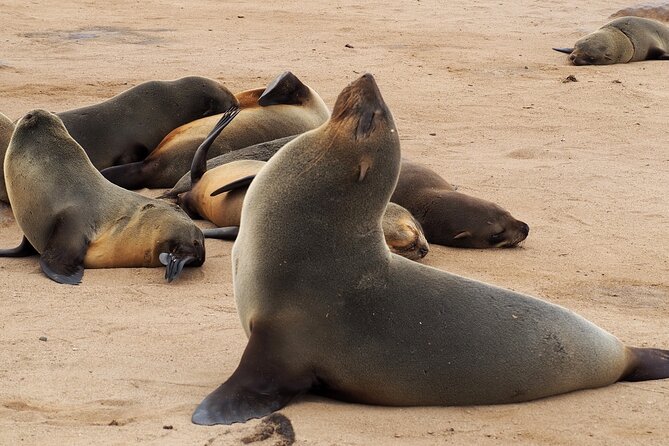
Day 6 starts with a short walk to the Cape Cross Seal Reserve, home to a major Cape fur seal breeding colony. The schedule notes the scale during breeding season when you can see huge numbers of seals basking on the beach, and you’ll get to experience both the sight and the smell that comes with it.
Then you stop at the Zeila Shipwreck, described as a later victim (as recent as 2007). After that, you arrive in Swakopmund early afternoon. You get time to explore on foot, or you can choose optional activities from skydiving to quad biking and more. Dinner is at your own expense, and the guide can help with recommendations or bookings.
This is a great setup if you like variety. You can take the coast in quietly, or you can spend Swakopmund time chasing adrenaline.
Day 7: Sandboarding options, Tropic of Capricorn photos, and the drive into Desert Camp
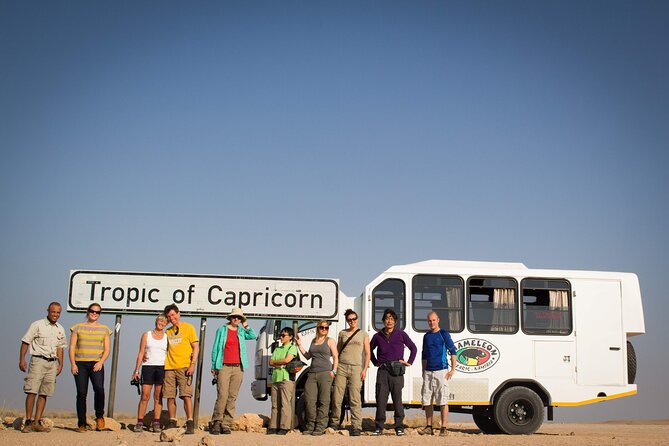
You leave Swakopmund at 11:30, which is a deliberate timing choice. It leaves room for optional activities before the long drive segment. For adrenaline lovers, the options listed include sandboarding down dune slopes, quad biking through the dune field, and cycling through Swakopmund’s old city.
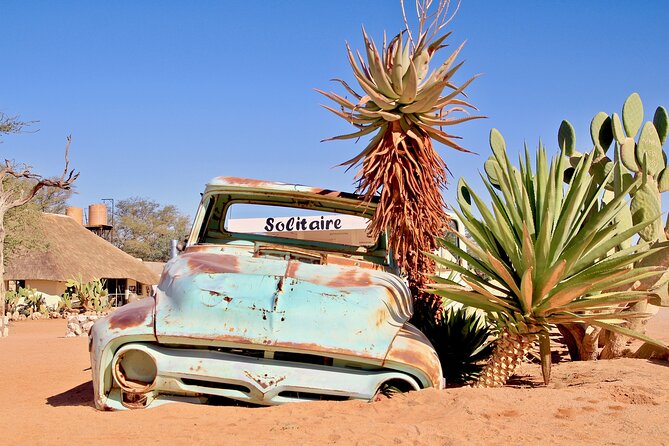
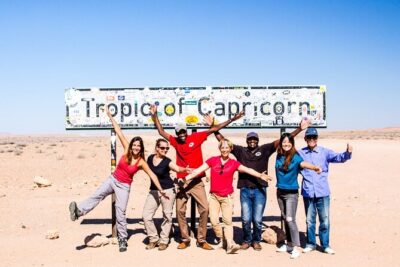
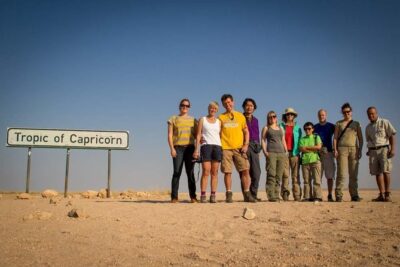
You also make two quick “stretch and reset” stops. One is the Tropic of Capricorn sign for photos and leg-stretching. Another is Solitaire, mainly a bathroom break plus a chance to grab a cool drink and snack.
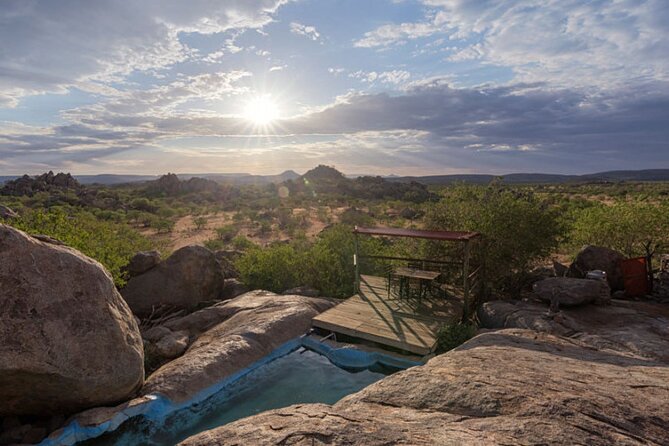
Late afternoon, you reach Desert Camp, settle into your rooms, and take a quick walk to enjoy the sunset. Dinner is prepared by the guide.
If you hate long travel days, this one can still feel like a travel day. But the schedule includes enough breaks to keep it from feeling monotonous.
Day 8 is Sossusvlei day: Deadvlei, brunch in Sossusvlei, Dune 45 photos, and Sesriem Canyon
This is the day you remember for the rest of your trip.
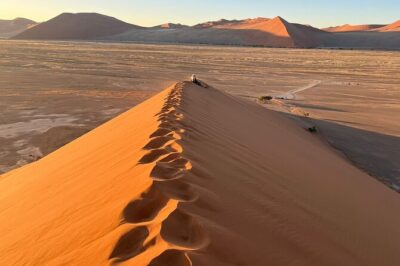
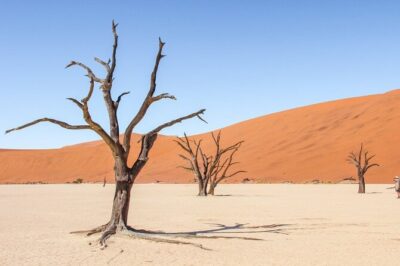
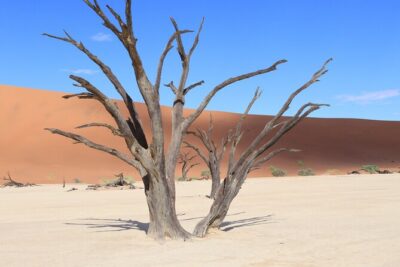
First, you explore Deadvlei from the 4×4 car park, with time set aside for the area. You then head into Sossusvlei for brunch. That meal timing matters. It gives you a reason to slow down in the middle of the dune experience rather than just race for photos.
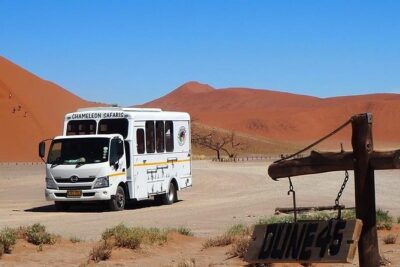
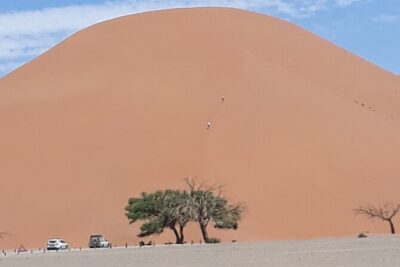
On the way out, you stop at Dune 45 for photos. After that, you explore Sesriem Canyon, described as a small but important water source for local wildlife.
Why this is valuable: it’s not one big stop and then leave. You get a sequence of sights that each feel different in shape and mood, then you finish with a water-focused canyon stop before the final day wrap-up.
Day 9: cheetah learning at Solitaire, then back to Windhoek
Your day begins with an hour at the Solitaire Carnivore Conservation project, focused on cheetah. This is a useful counterbalance to big scenery, because it brings conservation back into view at the end of the journey.
Then you travel back to Windhoek, passing through the Naukluft Mountains and Rehoboth and arriving early afternoon. The tour data also notes that flights are not recommended on this day, so plan accordingly.
This last day is best treated as travel-and-recovery time. Don’t schedule anything tight right after you arrive back in Windhoek.
Camping and lodge mix: what’s included, what to bring, and what to expect at camp
You get 5 nights camping and 3 nights accommodation on a twin share basis, with camping equipment included. That’s a big part of the “value” of a guided safari like this. It removes a major headache if you’re not trying to build your own gear system across Namibia.
Still, a key detail: a sleeping bag is not included. If you’re camping even once, bring one or plan to buy or rent it locally before you go. Also, drinks are not included, so you should expect to budget for water and other beverages beyond tap water.
The good news is that multiple evenings include dinner prepared by the guide over an open fire, which is exactly the kind of on-the-road comfort that makes camping feel like part of the experience instead of a chore.
Wildlife time strategy: how this schedule helps you actually see animals
This tour is designed around timed wildlife moments rather than random driving. In Etosha, you do sunrise game drives, then later afternoon drives focused on waterholes and the chance of predators. You also get the floodlit waterhole visit after dinner, which is where night-active animals can show up reliably.
In addition, the day structure matters:
- Mount Etjo is specifically set for a rhino search on the reserve, so you’re not hoping rhinos appear by accident.
- Palmwag gives you a realistic “desert elephant” possibility.
- The Skeleton Coast and Cape Cross are about wildlife of a different kind, the seal breeding colony, where the viewing is about timing and density.
Your best bet for good sightings is to stay mentally flexible. The schedule puts you in the right places, but wildlife still has its own timetable.
Food on the road: why camp meals are part of the value here
A big theme across the operator’s feedback for this route is the quality of camp food and the effort guides put into it. When dinner is prepared over an open fire, it changes the mood of the day. You’re not just eating to refuel. You’re eating as part of the day’s ending, which feels especially good after sunrise and long drives.
You’ll also have meals included throughout the trip, with breakfasts, lunches, and dinners built into the day plan. That matters more than it sounds in Namibia, because it reduces decision fatigue and keeps the group moving on schedule.
If you’re the type who likes to control your own food costs, you’ll notice dinner during Swakopmund time is at your own expense. Everything else is scheduled.
Price and value: what your $2,568 buys you
At $2,568.47 per person, this is not a budget backpacker deal. But it can feel like strong value because so much is folded into the price.
Here’s what you’re paying for that you would struggle to replicate on your own:
- Transport in a custom built safari vehicle with a pop-up roof
- Pick-up and drop-off within Windhoek city limits
- Return airport transfers
- Guided drives in Etosha including a full day and afternoon game drive
- The Himba village experience
- Cape Cross Seal Reserve time
- A dedicated Sossusvlei region day, including Sesriem Canyon
- Camping equipment (but not a sleeping bag)
- Professional English speaking driver and guide
- Meals included: breakfast, lunch, and dinner counts across the trip
What’s not included, so plan for it:
- Drinks other than tap water, plus snacks
- Optional activities in Swakopmund
- Travel insurance
- A sleeping bag
If you want “comfort plus nature” without managing reservations, fuel, and park timing yourself, that’s where the price earns its keep.
Who this tour suits, and who might want a different fit
This tour fits best if you want a structured overview of Namibia and you’re okay with a mixed style of nights, from camping to accommodation. It also suits you if you like wildlife focus but you also want culture and conservation moments built in, like the Himba village experience and the cheetah learning stop.
It might feel like too much for you if you hate early starts, because Etosha includes sunrise drives and fast-moving viewing blocks. Also, if camping is a deal breaker, remember that you’re doing five nights in a camping setting.
The tour also notes a moderate physical fitness level is expected, so keep that in mind if you have mobility concerns.
Should you book this Namibia safari?
Book it if you want one trip that covers Etosha wildlife, the Skeleton Coast shipwreck coastline, and the Sossusvlei dunes with a guide driving the planning side for you. The combination of scheduled waterhole drives, Cape Cross seal viewing, and the full Sossusvlei day is exactly the kind of “best of Namibia” blend that works when time is limited.
Skip it or consider alternatives if you’re camping-avoidant or if you don’t want your schedule shaped by sunrise game drives. Also, if you dislike paying for optional activities, know that Swakopmund time includes room for extras at your own expense.
FAQ
What time and where does the tour start?
The tour starts at 7:00 am from Chameleon Safaris, Ferry Street, Windhoek, Namibia.
Is pickup included?
Yes. Pick-up and drop-off within Windhoek city limits are included.
How many travelers are in a group?
The tour has a maximum group size of 10 travelers.
Do I need to bring my own camping sleeping bag?
Yes. Sleeping bag is not included.
What camping gear is provided?
Camping equipment is included. You’ll still need to bring your own sleeping bag.
How much of the trip is camping versus lodge accommodation?
You get 5 nights camping and 3 nights accommodation.
Are meals included?
Yes. Breakfast, lunch, and dinner are included across the trip. Tap water is also provided.
What wildlife and nature stops are included?
Etosha National Park game drives, the Cape Cross Seal Reserve, Skeleton Coast stops including the Zeila Shipwreck, and the Sossusvlei region day with Deadvlei, Dune 45, and Sesriem Canyon.
Are there optional activities?
Optional activities are available in Swakopmund, and you can join them if you want. They are not included in the tour price.
What if I cancel?
This experience is non-refundable and cannot be changed for any reason.
Camping the Country, More Itineraries
- 12 Day Classic Namibia Camping Safari★ 5.0 · 77 reviews
- 3 Day Sossusvlei Budget Camping Safari★ 5.0 · 62 reviews
- 6 Day Sand, Sea & Etosha Budget Camping Safari★ 5.0 · 36 reviews
- 7 Day Southern Namibia and Sossusvlei Camping Safari★ 5.0 · 26 reviews
- 9 Day Canyons, Dunes & Wildlife Camping and Lodge Safari★ 4.5 · 23 reviews
Sossusvlei, More Ways to Get There
- 3 Day Sossusvlei Budget Camping Safari★ 5.0 · 62 reviews
- 7 Day Southern Namibia and Sossusvlei Camping Safari★ 5.0 · 26 reviews
- 4-Day Swakopmund And Sossusvlei Accommodated Adventure from Windhoek★ 4.5 · 21 reviews
- 5-Day Sossusvlei & Sandwich Harbour Photography Tour★ 5.0 · 13 reviews
- 3 Days Amazing Red Dunes of Sossusvlei | Private Guided Tour★ 5.0 · 10 reviews
North to Cape Cross and the Skeleton Coast
- 7 Day Northern Namibia and Skeleton Coast Camping Safari★ 5.0 · 19 reviews
Other Namibia trips from our own write-ups


Sossusvlei & the Red Dunes, all of them.
 ★ 5.03 Day Sossusvlei Budget Camping SafariFrom $63262 reviews
 ★ 5.07 Day Southern Namibia and Sossusvlei Camping SafariFrom $1,84626 reviews
 ★ 4.54-Day Swakopmund And Sossusvlei Accommodated Adventure from WindhoekFrom $1,29821 reviews
 ★ 5.03-Day Sossusvlei Express Accommodated Safari from SwakopmundFrom $1,06719 reviews
 ★ 5.05-Day Sossusvlei & Sandwich Harbour Photography TourFrom $2,02313 reviews
 ★ 5.02 Day Scenic Sossusvlei Adventure Tour in NamibiaFrom $77911 reviews
 ★ 5.03 Days Amazing Red Dunes of Sossusvlei | Private Guided TourFrom $1,42110 reviews
 ★ 4.53 Day Sossusvlei Camping Schedule and Sandwich HaborFrom $09 reviews