
REVIEW · SAFARI
6-Day Dunes and Wildlife Accommodated Safari from Windhoek
Six days, and Namibia still feels huge. You pack Etosha game drives with the famous Sossusvlei sunrise for a fast, high-impact mix of predators, salt pan drama, dunes, and a shipwreck stop on the coast. One thing to plan for: it is a group tour with a set rhythm, so if you want lots of free-form detours, this can feel a bit regimented.
I like that it is run with a small group size (max 12) and a custom air-conditioned safari vehicle with pop-up roof, so wildlife viewing and comfort both get attention. You also get real structure, with hotel-style twin-share rooms at night and meals lined up, but long road days mean you should bring a good travel mindset for transitions.
In This Review
- Key Highlights at a Glance
- Value and What You Actually Get for $2,127.99
- Getting There From Windhoek: Pickup, Group Size, and Pace
- Etosha National Park: Predator Time, Waterholes, and the Salt Pan
- Day 1 Arrival to Halali and the floodlit waterhole habit
- Day 2: Morning drives plus the Etosha Pan
- Day 2 sunset exit to Etosha Village
- The Long Road to the Coast: Zeila Shipwreck and Rural Namibia Encounters
- Swakopmund Stop: A Real Town Break from Safari
- Kuiseb and Gaub Pass to Solitaire: Capricorn Sign, Optional Sand Boarding, and Desert Camp Views
- Sossusvlei Sunrise and Deadvlei Walks: Where the Day Changes Gear
- Dawn departure and the 4×4 shuttle plan
- Deadvlei and the bleached clay and camel thorn trees
- Big Daddy for views
- Sossusvlei, brunch, Dune 45 photos, and Sesriem Canyon
- Solitaire and Cheetah Tracking: How Conservation Work Gets Real
- What to Pack and How to Survive the Heat, Cold, and Mornings
- Who This Safari Fits Best (and Who Should Rethink)
- Should You Book This Dunes and Wildlife Safari?
- FAQ
- Where does the tour start and end?
- What time does the tour start in Windhoek?
- How many people are in the group?
- What accommodation and meals are included?
- What activities are included beyond the game drives?
- What transportation is provided?
- What is not included in the tour price?
- Is a passport required, and do I need to meet a fitness level?
- Is the tour refundable if I cancel?
Key Highlights at a Glance
- Etosha game drives with early predator timing: multiple sessions plus waterhole stops help you catch different animals at different hours
- Floodlit waterholes at Halali: an easy way to extend the wildlife time before and after dinner
- Etosha salt pan stop: you see where the park’s identity comes from, not just the animals
- Skeleton Coast energy via the Zeila Shipwreck: stark coast views and a memorable named wreck
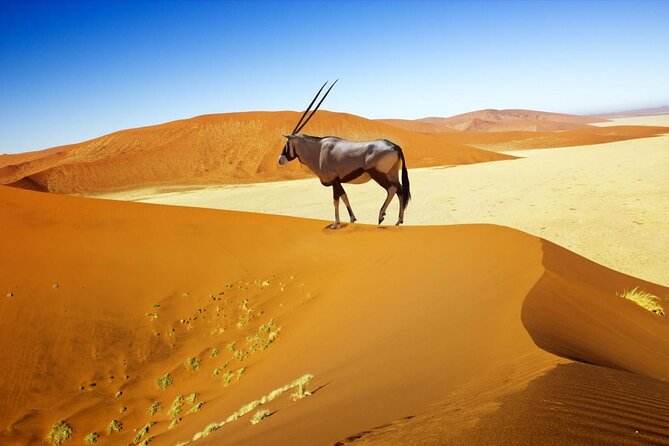
- Sossusvlei sunrise workflow: dawn gate timing, a 4×4 shuttle, then walking where the dunes and clay make their own art
- Cheetah conservation experience in Solitaire: learn how rescue and care work, with photo-friendly viewing
Other safari runs we have written up
Value and What You Actually Get for $2,127.99
At $2,127.99 per person, this is not a budget safari. But it is trying to be value dense, not value vague. In one compact week you cover the big Namibia trio: Etosha National Park, the Namib Desert and Sossusvlei, and the coast-side stopping point near the Zeila Shipwreck. You also do it with transport handled end to end, plus an English-speaking driver-guide who keeps the whole machine moving.
What you are really paying for is time efficiency and logistics. Between Windhoek and the desert, the distances are real, and self-driving turns into a whole separate trip. Here, your work is mostly waking up, dressing for cold mornings and hot afternoons, and showing up when the day starts.
A key value piece: the tour includes multiple game drive blocks, plus a full day and a section of the Sossusvlei region. That means you are not just doing one quick loop and calling it wildlife country. You are getting repetition, which is how you improve your odds, especially for predators.
Getting There From Windhoek: Pickup, Group Size, and Pace
The tour starts at Chameleon Safaris on Ferry Street, Windhoek. Your day kicks off with a pickup around 7:15am, with a pre-departure meeting at the office. You return to that same meeting point at the end.
This is a group tour with a maximum of 12 travelers. In practice, that small size matters. You get more flexibility than with huge buses, and the guide can manage timing without turning everything into a scramble. Your vehicle is also well set up for spotting wildlife, with an air-conditioned safari setup and pop-up roof for better viewing angles.
About pace: there are long driving segments between regions. That is not a flaw, it is Namibia. The good news is the itinerary gives you enough structure to reduce stress. The downside is you cannot slow-roll your own itinerary. If you like to wander off schedule or stop whenever you feel like it, this tour will feel limiting.
Etosha National Park: Predator Time, Waterholes, and the Salt Pan
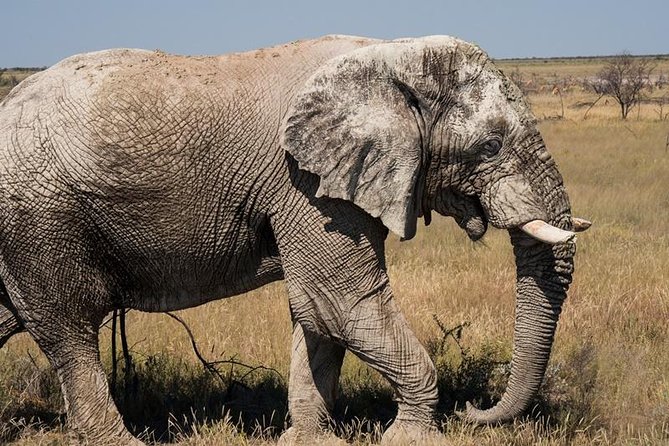
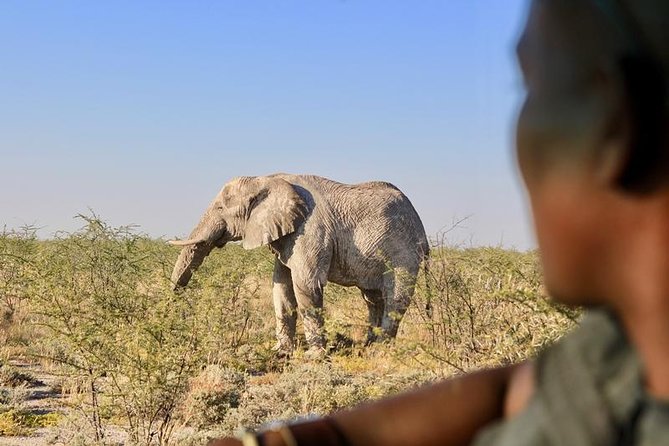
Etosha is the main wildlife engine on this trip, and the plan gives you a mix of styles, not one single method.
Other wildlife days we have written up
- 9 Day Canyons, Dunes & Wildlife Camping and Lodge Safari
★ 4.5 · 23 reviews
Day 1 Arrival to Halali and the floodlit waterhole habit
You enter via Andersson Gate around 2pm and spend the afternoon on game drives, continuing through to Halali for the night. Halali has a very useful feature: a floodlit waterhole. If you want a more relaxed wildlife session, this is where to do it. Go before dinner if you can, and again afterward, when the animals are often more comfortable with the steady rhythm of visitors.
Practical tip: keep your camera ready and your jacket handy. Even in warm-season trips, Etosha evenings can cool off fast when you are standing still waiting for movement.
Day 2: Morning drives plus the Etosha Pan
Day 2 is set up for two different kinds of viewing. You start with morning game drives focused on predators. Then later you shift gears for a drive out into the park and a stop at the Etosha Pan, basically seeing the feature that gives Etosha its name.
This matters because Etosha is not just about animals on grass. The salt pan is a huge part of how the park functions. The tour also frames it as a massive breeding ground for flamingos, so your pan stop is more than a quick photo moment.
Afterward you hit Okaukuejo waterhole, with time to stretch, climb the tower, buy a cold drink, and use the bathroom. That tower time is more than convenience. Height can change what you notice at a waterhole, especially when activity is spread out.
Day 2 sunset exit to Etosha Village
You then exit the park just before sunset and drive to Etosha Village for the evening. That sunset timing is smart for wildlife and light, but it also means you should not plan any extra solo stops. The day ends where the next day’s logistics can work.
The Long Road to the Coast: Zeila Shipwreck and Rural Namibia Encounters
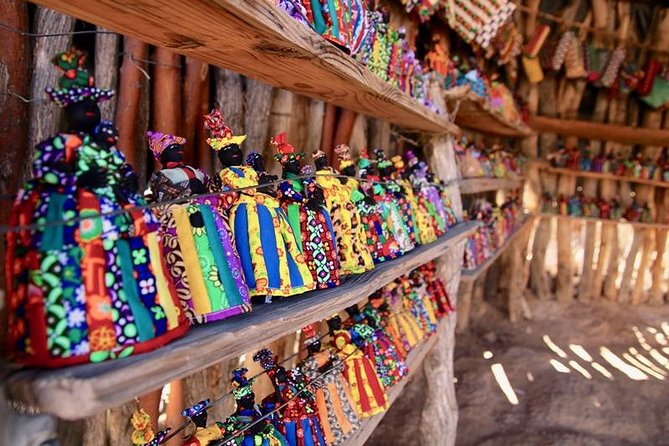
Day 3 is where the trip switches from pure wildlife-focus to a wider Namibia story. You still spend significant time in the vehicle, traveling through Damaraland, with chances to meet people including Herero, Damara, and Himba communities. The itinerary specifically mentions market opportunities where you can support local people.
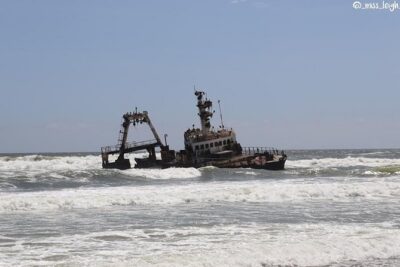
Then you move on to the coast for a stop at the Zeila Shipwreck. This is your built-in taste of the Skeleton Coast vibe, where the land feels harsh and the coastline can look otherworldly. A named shipwreck stop also helps the day feel like it has milestones, not just hours of road.
This is a good day if you like variety. It is a tough day if you get restless in transit. Either way, bring snacks you are comfortable with, because drinks are not included, and your energy management matters when you are switching from rural stops to long driving stretches.
Swakopmund Stop: A Real Town Break from Safari
You reach Swakopmund and check into accommodation, then you get time to explore the town on foot before dinner. This is your reset between the wildlife parks and the desert icons.
Why I like this kind of stop: it helps you avoid the feeling that you never leave the safari bubble. Swakopmund is coastal, so even if your main goal is animals and dunes, you benefit from getting a normal meal rhythm and a walkable change of scenery.
If you prefer structured downtime, you can keep it simple: stroll, grab a drink, and aim to get decent sleep. The Sossusvlei sunrise day starts very early later.
Kuiseb and Gaub Pass to Solitaire: Capricorn Sign, Optional Sand Boarding, and Desert Camp Views
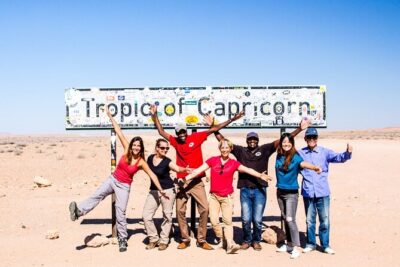
Day 4 starts with a flexible element. After breakfast, you can join an optional sand boarding activity, with pick-up from your Swakopmund guesthouse or hotel at 11:15am. There is also time around the Tropic of Capricorn sign, plus travel via Kuiseb Pass and Gaub Pass toward Solitaire.
These passes are part of the scenery equation, but the practical value is that they make the day feel like travel through something, not travel to nothing. You are moving across Namibia in a way that gives you photo opportunities and breaks the monotony of highway miles.
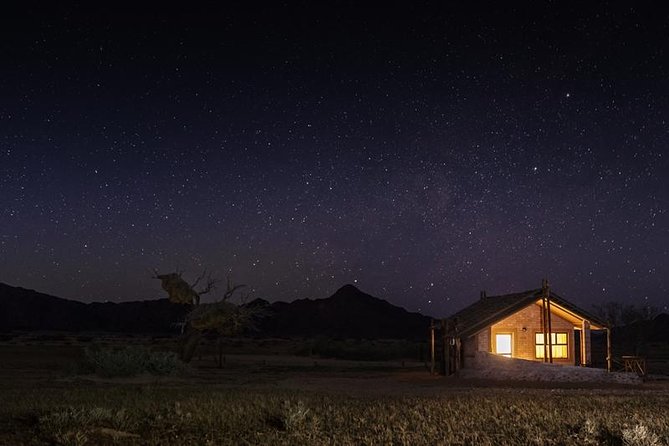
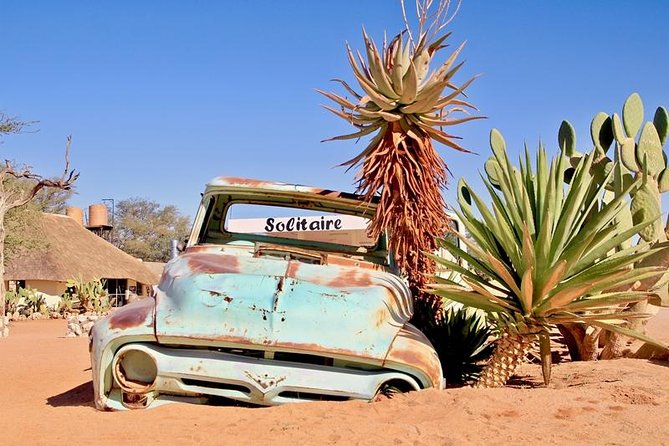
By late afternoon you arrive at your Desert Camp. You get time to relax with views, followed by a sunset walk overlooking the Naukluft Mountain range. That walk is an easy win because it does not require major effort, but it gives you that big-sky desert feeling.
Sossusvlei Sunrise and Deadvlei Walks: Where the Day Changes Gear
Day 5 is the heart of the trip for many people: Sossusvlei at sunrise, plus multiple stops in the Sossusvlei region and return stops for photos.
Dawn departure and the 4×4 shuttle plan
You leave camp at dawn and head to the park gate for sunrise. Then you drive down an ancient river bed to the 2×4 parking area (around 55 km) and take a 4×4 shuttle into the Sossusvlei region.
This matters because it is a time and access strategy. You get to be in the right place early when light is best for dunes and when the area feels more peaceful. The shuttle also means you spend your energy where you will walk and look, not just drive.
Deadvlei and the bleached clay and camel thorn trees
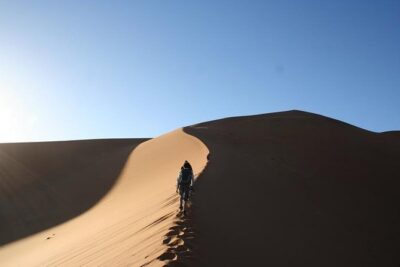
Once in the area, you explore on foot, then move into Deadvlei: bleached, cracked clay and skeletal camel thorn trees, with huge dune backdrops and constantly shifting colors.
If you like photography, this is a day built for it. Even if you do not consider yourself a photographer, it is still visually dramatic enough to make the morning feel like you earned it.
Big Daddy for views
If you have energy, you can climb Big Daddy dune, described as the highest in the area for wide views across the Namib Desert. This is a good test of how you are feeling physically after several days of driving.
Sossusvlei, brunch, Dune 45 photos, and Sesriem Canyon
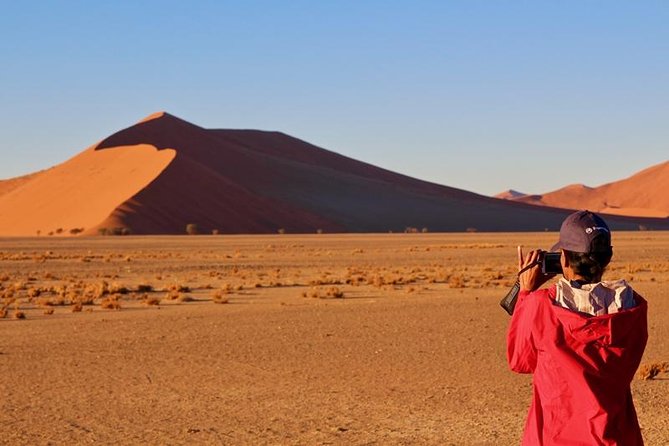
After Deadvlei you head to Sossusvlei, explore the vlei, then enjoy brunch. Later you stop at famous Dune 45 for photos as you drive back. Finally you visit Sesriem Canyon, including time to climb down into the canyon and look at the small but interesting geological formation. The itinerary notes Sesriem Canyon was once a source of permanent water for local wildlife, which helps you understand why people cared about this pocket of rock.
This is a long day of walking and driving. Plan your pace, hydrate, and wear sturdy footwear with good grip. A lot of the time, your biggest comfort variable is simply not underestimating how hot sand can get.
Solitaire and Cheetah Tracking: How Conservation Work Gets Real
Day 6 is quieter in pace, but it has a strong purpose. You start with breakfast and then go to Solitaire, where you join an open-vehicle visit to a local conservation project.
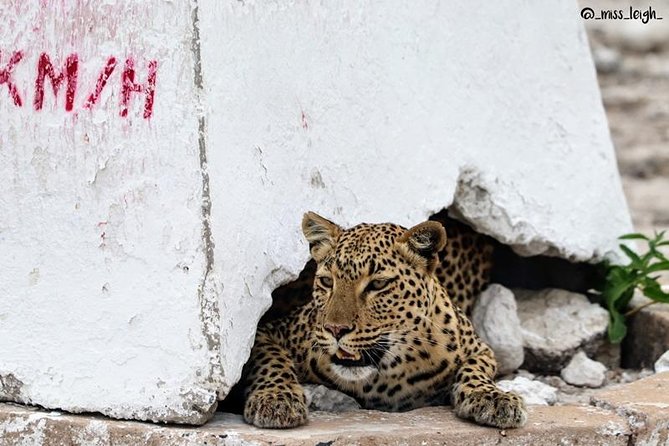
This is the moment focused on cheetahs that cannot be released for different reasons. You spend about one hour learning how the project works, with the chance for incredible photos of the world’s fastest land mammal. The tour description also frames this as tracking cheetahs alongside a biologist, so you are not just getting a viewing session, you are getting some scientific context.
Why this is worth it: you leave with more than a memory of speed. You learn why certain animals stay under care, and you get a sense of how local work connects with wildlife survival beyond the park boundary.
What to Pack and How to Survive the Heat, Cold, and Mornings
Even without being told, you will feel it: early starts, dust, sun, and temperature swings between parks and desert mornings.
Here is what I would prioritize:
- Layers for early mornings in Etosha and at the desert sunrise start
- Sunglasses and strong sunscreen for Sossusvlei walks
- Sturdy walking shoes with grip for Deadvlei and Sesriem Canyon
- A small day bag so you keep essentials handy during long drives
- Refillable water bottle, even though tap water is included, it helps you keep rhythm
- Camera and a spare battery, because light changes fast in Deadvlei and dune areas
Also plan mentally for schedule days. This tour runs like a set storyline. If you want to enjoy it, you have to be on board with that style.
Who This Safari Fits Best (and Who Should Rethink)
This is a great fit if you want:
- Big Namibia highlights in a short time without self-driving stress
- A structured itinerary with professional guidance
- A mix of wildlife, desert walking, and a coast-side stop that breaks up the trip
This may not be your best match if:
- You strongly dislike group-tour timing and fixed stops
- You want lots of independent flexibility, like adding extra drives or skipping parts of the schedule
- You get overwhelmed by long road days between regions
If you like clear plans and strong guide leadership, the setup should work well. If you are the type who wants to roam and improvise every day, you might feel constrained.
Should You Book This Dunes and Wildlife Safari?
I would recommend booking this if your goal is to see Namibia’s biggest natural hits in six days, with less driving hassle and more expert time management. The combination of Etosha game drives, a pan stop, a coast-side Zeila Shipwreck moment, and a full Sossusvlei sunrise day is a lot to fit into one trip, and it is exactly the kind of itinerary that saves you from planning fatigue.
I would hold off if you know you do not do well with regimented schedules. The tour is efficient, but it is still a group. If you can travel with the flow, it is a strong value for what you get. If you want total freedom, you may feel boxed in.
FAQ
Where does the tour start and end?
The tour starts at Chameleon Safaris, Ferry Street, Windhoek and ends back at the same meeting point.
What time does the tour start in Windhoek?
The tour start time is listed as 7:00am, with pickup noted at 7:15am and a pre-departure meeting at the Chameleon Safaris office.
How many people are in the group?
This tour has a maximum of 12 travelers.
What accommodation and meals are included?
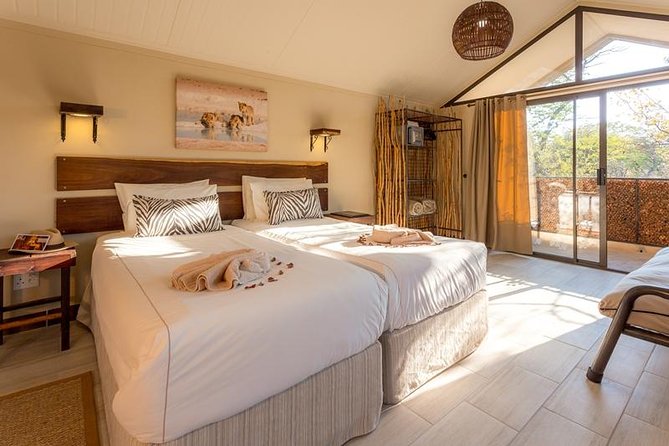
You get 5 nights of accommodation in twin-share rooms with en-suite bathrooms. Meals included are breakfast (5), lunch (5), and dinner (4).
What activities are included beyond the game drives?
Included activities are a Himba Village experience (listed as 1 hour), exploring the Sossusvlei region including Sesriem Canyon (listed), and a cheetah experience (listed as 1 hour). The itinerary also includes a mix of game drives and specific stops in Etosha.
What transportation is provided?
You travel in a custom-built air-conditioned safari vehicle with a pop-up roof. Pickup and drop-off within Windhoek city limits are included.
What is not included in the tour price?
Not included are drinks (including mineral water, soft drinks, and alcohol), snacks, optional activities, personal travel insurance, and airport transfers.
Is a passport required, and do I need to meet a fitness level?
Yes, you need a current valid passport on the day of travel. The tour asks for a moderate physical fitness level.
Is the tour refundable if I cancel?
No. The experience is non-refundable and cannot be changed for any reason.
More Wildlife Days in Namibia
- 9 Day Canyons, Dunes & Wildlife Camping and Lodge Safari★ 4.5 · 23 reviews
Safaris We Have Been On
- 12 Day Classic Namibia Camping Safari★ 5.0 · 77 reviews
- 3 Day Sossusvlei Budget Camping Safari★ 5.0 · 62 reviews
- 6 Day Sand, Sea & Etosha Budget Camping Safari★ 5.0 · 36 reviews
- 7 Day Southern Namibia and Sossusvlei Camping Safari★ 5.0 · 26 reviews
- 9 Day Canyons, Dunes & Wildlife Camping and Lodge Safari★ 4.5 · 23 reviews
More Namibia Reviews
- Windhoek: City and Township Tour★ 4.8 · 430 reviews
- Half-Day Windhoek City and Township Cultural Tour★ 4.5 · 187 reviews
- Windhoek: Bushman Walk with the San★ 4.9 · 145 reviews
- Windhoek City Tour★ 5.0 · 113 reviews
- 10-Day Namibia Highlights Guided Tour from Windhoek★ 5.0 · 78 reviews
Other Namibia trips from our own write-ups


Safari, all of them.
 ★ 5.0ETOSHA PARK SAFARI with local guides in 9-seater 4x4sFrom $12787 reviews
 ★ 5.012 Day Classic Namibia Camping SafariFrom $3,07177 reviews
 ★ 5.03 Day Sossusvlei Budget Camping SafariFrom $63262 reviews
 ★ 5.03 Day Etosha Budget Camping SafariFrom $63437 reviews
 ★ 5.06 Day Sand, Sea & Etosha Budget Camping SafariFrom $1,35536 reviews
 ★ 5.0Safari in Etosha national park with professional tour guides born in Etosha.From $12732 reviews
 ★ 5.07 Day Southern Namibia and Sossusvlei Camping SafariFrom $1,84626 reviews
 ★ 4.59 Day Canyons, Dunes & Wildlife Camping and Lodge SafariFrom $2,56823 reviews
This tour also turns up in