
REVIEW · KATUTURA & MONDESA TOWNSHIP WALKS
Katutura:tours and transport around the townships
Katutura is where you see Namibia up close. In 4 hours, this tour takes you from hotel pickup in Windhoek into the township for market time and a guided walk with real local context, plus stops that connect everyday life with community projects. I really like the way the format uses short, focused segments, so you are not just driving past places, you are actually talking, walking, and looking. I also like the small-group setup, because it feels more personal and you can ask questions without shouting over a crowd.
One thing to watch is timing and completeness. The tour is sold as 4 hours with specific stops, but a couple of writeups mention the schedule running short or some elements feeling skipped. If you book, I suggest you confirm the plan right at pickup and keep an eye on whether the cultural center and food stop are included on your day.
In This Review
- Key things I’d focus on before you go
- Katutura on a 4-hour clock: what this tour really delivers
- Pickup and transport from Windhoek: smoother than you expect
- The markets: where the shopping is part of the story
- Cultural center stop: when the learning needs to show up
- The guided walk: music, art, and the stories behind daily life
- The community project visit, including mentions like Penduka
- Price and value at $60: what you should measure
- Small group comfort, accessibility, and languages that matter
- Practical tips so your day goes smoothly
- Who this tour is best for
- Should you book Katutura with Omutambo tours and transport?
- FAQ
- How long is the Katutura township tour?
- Where are the pickup and drop-off locations in Windhoek?
- What is included during the tour?
- What languages are the live guides?
- Is the tour accessible for wheelchair users?
- Can I cancel or book without paying right away?
Key things I’d focus on before you go

- Small-group feel: more interaction with your local guide during the walk and stops
- Market + street food: you get time with sellers and you try traditional foods like single quarters
- Cultural center stop: this is where the stories should connect to what you see on the streets
- Community project visit: you’ll see how local initiatives show up beyond the market
- Hotel pickup at two places: Hilton Windhoek or Avani Windhoek Hotel & Casino for round-trip transport
- English and Afrikaans guiding: tour guide language support (useful if your group has mixed preferences)
More walks through Katutura and Mondesa with local guides
Katutura on a 4-hour clock: what this tour really delivers

Katutura Township sits just outside Windhoek, and the experience here is built for a half-day. You are not getting a long, slow day trip. You are getting a guided snapshot: markets, a short walk through everyday streets, a cultural stop, then a community-project visit before you head back to your hotel.
That timing matters. When your total time is about 4 hours, the guide’s pacing is everything. You want a plan that moves you between highlights without rushing through the parts that help you understand the place. This tour is structured around exactly those moments: buying and tasting in the market, learning at a cultural center, then seeing a community project while your guide connects it back to what you noticed earlier.
If you like tours where you can ask questions and then immediately see the answer on the ground, this one fits well. If you prefer a very free, independent wander, you may feel boxed in by the schedule.
Pickup and transport from Windhoek: smoother than you expect
Your day starts with hotel pickup from one of two options: Hilton Windhoek or Avani Windhoek Hotel & Casino. That is a big quality-of-life detail in a country where you might otherwise have to coordinate transport yourself. Round-trip transport to and from Katutura Township is included, so you do not lose half your time figuring out how to get there safely and on time.
Because the pickup is fixed to specific hotels, you also get a practical advantage: you can plan around a known start time and meet your guide without guesswork. Bring your patience for town logistics, but in general, having these set points makes the tour more reliable than random street pickups.
Also, the guide is live and speaks either English or Afrikaans. That matters more than people think, especially in a township context where small explanations can change how you interpret what you see.
The markets: where the shopping is part of the story

The market stop is the heart of this half-day. You will meet sellers working with fresh produce, handmade crafts, and traditional food. What I like about including markets is simple: you get a front-row look at daily economy and local creativity, not just a staged performance for visitors.
You also get time to interact. Vendors are the ones who can explain what something is, how it is used, and what it represents locally. Your guide’s job is to translate the meaning behind what you see, and to help you ask questions you might not know how to frame on your own.
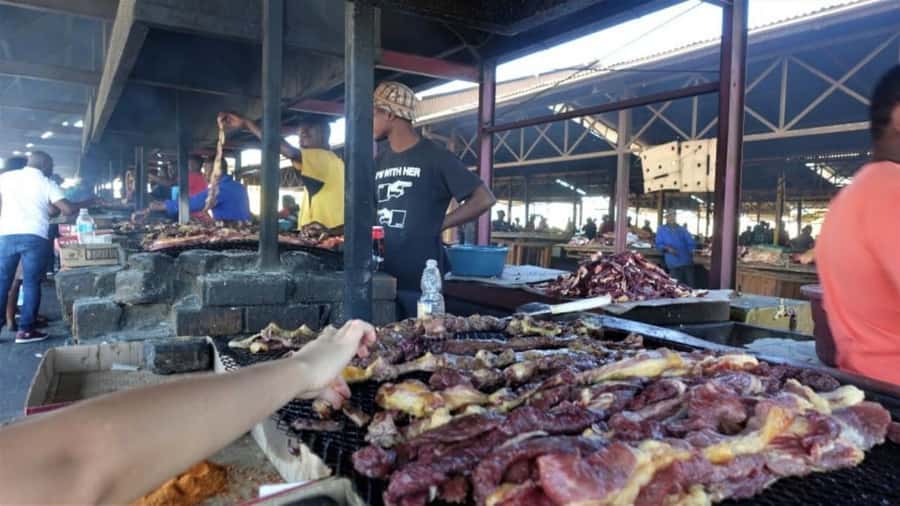
Food is part of that. You get a tasting of traditional street food, and one food item specifically mentioned is single quarters. Even if you are a cautious eater, the tasting format usually works well because you can sample without committing to a full meal. It is also a good way to understand why markets are not only for buying, they are social spaces where people connect while they work.
Craft shopping is another bonus, and here is a practical tip: if you see something you like, ask the guide for the best chance to understand what it is before you pay. That one small step can help you avoid buying something you later realize is decorative but not what you thought it represented.
Some writeups mention specific food purchases like kapana as takeaway. That tells me the market moment can still include quick, practical options for people who do not want to eat on the spot. Either way, you should plan on at least tasting, since it is included.
- Windhoek: City and Township Tour
★ 4.8 · 430 reviews - Half-Day Windhoek City and Township Cultural Tour
★ 4.5 · 187 reviews - Windhoek: Bushman Walk with the San
★ 4.9 · 145 reviews - 6-Day Dunes and Wildlife Accommodated Safari from Windhoek
★ 5.0 · 123 reviews - Windhoek City Tour
★ 5.0 · 113 reviews
Cultural center stop: when the learning needs to show up
The itinerary includes an entry to a cultural center. This is where the tour should connect the dots between history, heritage, and what you are seeing right now on the streets. One of the most valuable things about a guided township visit is the guidance for interpretation, and the cultural center is one of the best places to get that.
However, a few accounts raised concerns about this part. Some mentions say the cultural center was not seen or that cultural and historical insights felt incomplete on the day. That is exactly the kind of thing you want to catch early, because once the tour time is gone, it is gone.
So here is my practical approach if you book: at pickup, ask your guide to confirm the order of stops, especially whether you will definitely visit the cultural center. You do not need to be confrontational. Just treat it like trip planning. If the schedule has flexibility, a quick confirmation can keep expectations aligned.
Also, the tour includes skip-the-line through a separate entrance. That is helpful in general, because you lose less time standing around.
The guided walk: music, art, and the stories behind daily life
After the market, you will move through lively streets with your guide sharing stories about the people who live in Katutura. The tour description highlights music, art, and dance as part of what you will hear about while you walk.
What I like about this approach is that it turns a location into a set of conversations. Instead of simply pointing at buildings and calling it a day, the guide uses the street walk to explain how culture shows up in real time. That can include what you notice visually and what you learn through local context.
It also keeps the experience from becoming purely transactional. Markets are often about buying, but a good guided walk makes it about understanding. Even if you only buy one small craft, you will still feel like you got value because you learned what the craft, the food, and the street life mean in context.
If you are the type who likes taking photos, do it thoughtfully. Ask first, and let the guide help you understand what is respectful. A township tour works best when you remember you are entering someone’s neighborhood, not just touring a museum.
The community project visit, including mentions like Penduka
The tour ends with a visit to a community project. This is where you see local initiatives and what they do to create positive change. I like including a project visit because it shifts the conversation away from stereotypes and into practical outcomes, even on a short tour.
One highlight that shows up in writeups is a stop connected with Penduka. That might be the name of the project you visit, depending on the day and logistics. If you hear that name from your guide, pay attention, because that is often where the tour turns from seeing into understanding.
One caution: with any community visit, timing and access can vary. If you have a strong interest in this stop, it is worth asking the guide what you will see and how the project works. Then you can focus your attention in a way that feels meaningful rather than rushed.
Price and value at $60: what you should measure
At $60 per person for about 4 hours, this tour is not a budget gamble. It is priced like an organized half-day with transport, guiding, and multiple stops. For that money, I expect two things:
1) The itinerary should match the promises, including the market time, cultural center entry, and the community project visit.
2) The time on the ground should feel worth the hotel pickup and transport.
A few accounts suggest that sometimes the duration feels off, with reports ranging from tours finishing earlier than expected to longer running times without clear compensation. That does not mean every day is like that, but it does mean you should be prepared to manage time expectations.
Here is how to judge value for yourself: if you care most about the markets, street food tasting, and craft interaction, the tour can feel worth it even if the cultural center stop is shorter. If you care about the historical and cultural context, you should prioritize making sure you actually get that cultural center moment.
Also, bottled water and snacks are included. Even with that, I recommend bringing a small extra snack you can keep in your day bag. If water and snacks are provided, great. If not, you will still be comfortable.
Small group comfort, accessibility, and languages that matter
A key selling point is small group sizes, which typically means less time waiting and more time asking questions. For township visits, that matters because it keeps the group from turning into a parade.
The tour also lists wheelchair accessibility. That is good to see if you or someone in your group needs it.
Language support is English and Afrikaans. If your group has mixed languages, you can decide based on comfort rather than being stuck with a single option. It also helps with the cultural center explanations, where you usually want to understand every key point.
And yes, the tour includes bottled water and snacks during the tour. That is practical, especially in warm weather.
Practical tips so your day goes smoothly
Here are the things I’d do to make this tour feel satisfying, not rushed:
- Confirm the stop list at pickup, especially that you will visit the cultural center and the community project.
- Ask about the street food tasting you will try, including whether it’s single quarters on your day.
- Bring cash for crafts, but buy thoughtfully. If you are unsure what something represents, ask your guide first.
- Pack a small extra snack and keep expectations flexible for timing. A half-day schedule can get impacted by local logistics.
- Use respectful photo habits. Ask before photographing people, and follow your guide’s cues.
- Wear comfortable walking shoes. You will be on your feet more than you might expect for a 4-hour tour.
If you do those things, you are more likely to leave with the main result most people want from a township visit: context you can actually use when you look back on what you saw.
Who this tour is best for
This tour is a strong fit if you want guided context rather than just a drive-by. You will probably enjoy it most if you like:
- local markets and craft shopping as part of the cultural experience
- guided explanations that connect streets, food, and community projects
- a half-day format when you have limited time in Windhoek
It may be less ideal if you are very time-sensitive, because a couple of accounts mention schedule issues. It also might not satisfy you if your top priority is a detailed, classroom-style lesson, since it is a short tour with multiple stops.
Should you book Katutura with Omutambo tours and transport?
If your goal is to experience Katutura with a guide, see markets, try street food like single quarters, and include a cultural center plus a community-project visit, this tour is a good option at the price point of $60 per person.
I’d book with two conditions in mind. First, go in expecting a guided walk with active stops, not a slow, deep academic lecture. Second, confirm the key stops and timing at pickup so you can quickly spot if the day is drifting away from the plan.
If you like practical, respectful encounters and you want your Windhoek trip to include real community life, this is worth it. Just keep your expectations grounded, and you will get far more out of the experience.
FAQ
How long is the Katutura township tour?
The tour duration is 4 hours.
Where are the pickup and drop-off locations in Windhoek?
Pickup and drop-off are available at Hilton Windhoek and Avani Windhoek Hotel & Casino.
What is included during the tour?
Included stops are local markets, a tasting of traditional street food, entry to a cultural center, a guided walk with local stories and highlights, and a visit to a community project. Bottled water and snacks are also included.
What languages are the live guides?
The live tour guide speaks English and Afrikaans.
Is the tour accessible for wheelchair users?
Yes, the tour is listed as wheelchair accessible.
Can I cancel or book without paying right away?
You can cancel up to 24 hours in advance for a full refund, and there is a reserve now & pay later option where you can book a spot and pay nothing today.
More Trips Across Namibia
- Windhoek: City and Township Tour★ 4.8 · 430 reviews
- Half-Day Windhoek City and Township Cultural Tour★ 4.5 · 187 reviews
- Windhoek City Tour★ 5.0 · 113 reviews
- 10-Day Namibia Highlights Guided Tour from Windhoek★ 5.0 · 78 reviews
- 11 Days Small Group Namibia Experience Fully Accommodated Tour★ 5.0 · 31 reviews
More Namibia Reviews
- Windhoek: City and Township Tour★ 4.8 · 430 reviews
- Half-Day Windhoek City and Township Cultural Tour★ 4.5 · 187 reviews
- Windhoek: Bushman Walk with the San★ 4.9 · 145 reviews
- 6-Day Dunes and Wildlife Accommodated Safari from Windhoek★ 5.0 · 123 reviews
- Windhoek City Tour★ 5.0 · 113 reviews
Katutura and Mondesa, Other Guides
- Windhoek: City and Township Tour★ 4.8 · 430 reviews
- Half-Day Windhoek City and Township Cultural Tour★ 4.5 · 187 reviews
- Katutura – Classic Township Experience★ 5.0 · 22 reviews
- Windhoek: Katutura Township and City Walking Tour★ 4.7 · 15 reviews
- Katutura Tour – Experience Genuine Namibian Life★ 5.0 · 11 reviews
Other Namibia trips from our own write-ups


Katutura & Mondesa Township Walks, all of them.
 ★ 4.8City and Township TourFrom $40430 reviews
 ★ 4.5Half-Day Windhoek City and Township Cultural TourFrom $37187 reviews
 ★ 3.8Mondesa Township Day Tour ExperienceFrom $6525 reviews
 ★ 5.0Katutura – Classic Township ExperienceFrom $4022 reviews
 ★ 4.7Katutura Township and City Walking TourFrom $4915 reviews
 ★ 3.7Mondesa Township TourFrom $16013 reviews
 ★ 5.0Katutura Tour – Experience Genuine Namibian LifeFrom $4011 reviews
 ★ 5.0Swakopmund Best Cultural Historical Township Tours NamibiaFrom $408 reviews
This tour also turns up in