
REVIEW · THE LIVING DESERT & LITTLE FIVE
Swakopmund: “UP CLOSE” Living Desert E-FatBike Tour
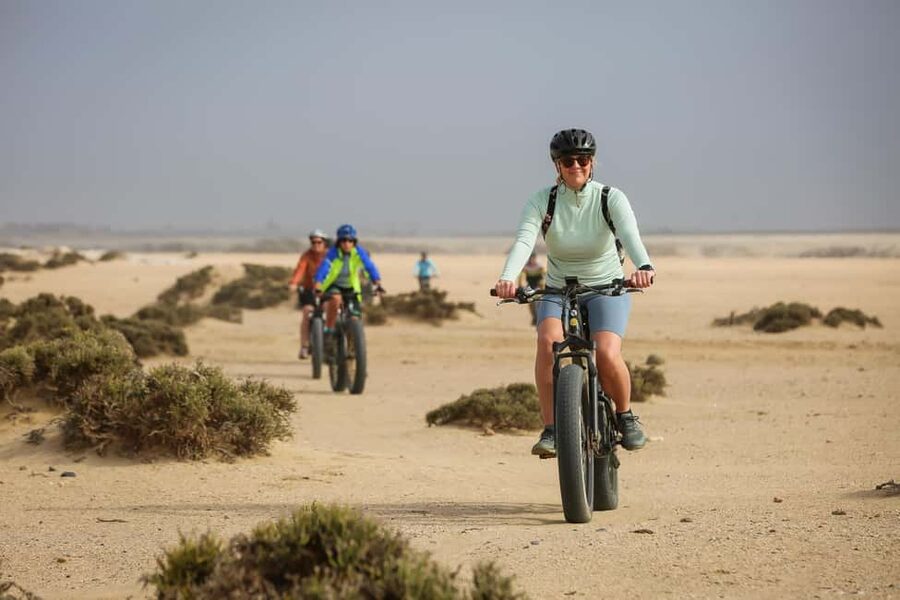
The Namib feels alive on wheels. This UP CLOSE e-fatbike ride gets you off the beaten path into the living Namib Desert near Swakopmund. I love the way the electric fat bikes make it quieter and easier to move through sand without a noisy engine vibe.
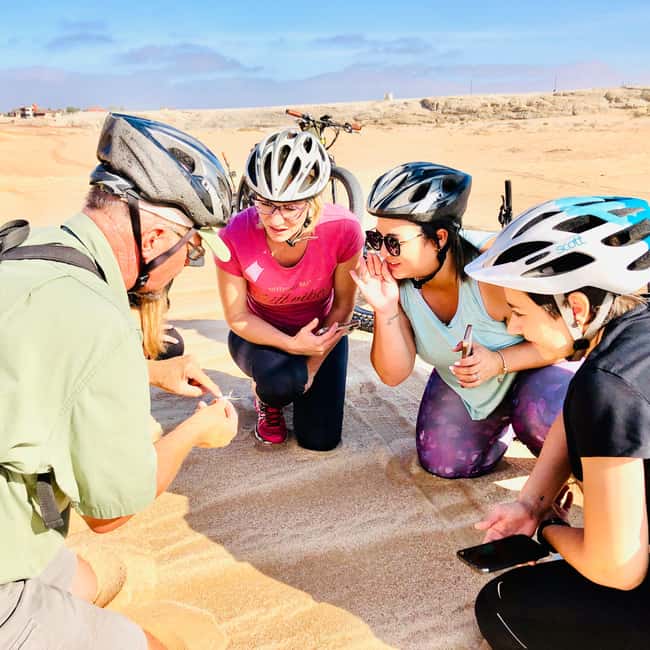
I also like that the experience is guided and hands-on, not just a drive-by stop. With expert guides like Hanjo, you get regular chances to connect small clues to real wildlife, from tiny reptile sightings to snakes and other desert signs.
One thing to plan for is comfort. Water is not included, and on a hot Swakopmund day the ride can feel more exhausting than you expect.
In This Review
- Key things to know before you go
- Up Close to the Namib on quiet e-fatbikes
- The 3.5-hour ride, step by step
- Swakopmund start: setting the tone
- Swakop Riverbed: the desert’s hidden pathways
- Gravel plains: easier cruising, better observation
- Dunes: the real thrill and the main workout
- Along the beach: desert meets the ocean
- Why the guides focus on tiny tracks (and why you should care)
- What makes it feel special: dunes, comfort, and a gentle pace
- Price and value: is $65 worth it?
- What to bring, what to wear, and what to skip
- How to decide if this is your kind of desert
- Book it or skip it? My honest call
- FAQ
- How long is the e-fatbike desert tour?
- What’s included in the $65 price?
- Is water provided during the tour?
- Do I get transport from and to my accommodation?
- What should I bring or wear?
- Is this tour suitable for children?
- What booking options and cancellation rules are available?
Key things to know before you go
- 3.5 hours of riding, from Swakopmund to riverbed, gravel plains, dunes, and the beach
- Small-group feel that helps the guide tailor the pace and focus
- Animal spotting by tracks, not just luck, with stops for even the smallest signs
- Quiet electric fat bikes that keep the experience gentle and low-impact
- No water provided, so bring a plan for refills
Other mornings spent tracking the Little Five in the sand
Up Close to the Namib on quiet e-fatbikes
This tour is built for people who want more than a view. You ride directly into desert terrain, where the distance between you and the living world is measured in feet, not miles. That matters in a place like the Namib Desert, because so much of the action is subtle. The desert does not scream for attention. It whispers, through tracks, tiny plants, and the occasional flash of movement.
The big idea here is simple: a fat bike with electric assist helps you go where normal bikes struggle. Fat tires grip loose sand better, and the e-assist means you can focus on spotting wildlife and following instructions, not just fighting the terrain. I also like the eco angle. The tour uses electric bikes, so you avoid that smoky, loud, exhaust-heavy feel that some outdoor activities can bring.
The 3.5-hour ride, step by step
You are out for about 3.5 hours, and the route is varied, which keeps it interesting. The ride starts in Swakopmund, then heads through different terrain types in a way that feels like a guided “desert sampler.”
Here is how it tends to play out, and what to expect at each stage:
Swakopmund start: setting the tone
You begin in the Swakopmund area and get a quick orientation before you head out. This part matters. It is where you learn how to handle the e-fatbike safely, how to ride in sand, and what to watch for later when the guide starts calling out animal signs.
If you are arriving on foot or from a hotel, plan to be there a bit early so you can get settled. Transport to and from your accommodation is not included, so you will need to handle getting to the starting point on your own.
- Walvis Bay: Marine Big 5 Luxury Catamaran Tour
★ 4.8 · 1,012 reviews - Swakopmund: Desert Dunes Quad Biking with Optional Sandboard
★ 4.9 · 590 reviews - Walvis Bay and Sandwich Harbour Tour
★ 4.8 · 483 reviews - Scenic Sandwich Harbour Tour
★ 5.0 · 277 reviews - Sandwich Harbour Adventure: Seals and Sandwich harbour dune drive
★ 5.0 · 165 reviews
Swakop Riverbed: the desert’s hidden pathways
Next comes the Swakop riverbed section. Even when it is dry, riverbeds act like natural corridors. They also tend to concentrate wildlife activity, because animals move through and use these routes.
The guide’s role shows up here. Instead of rushing onward, the stop-and-look rhythm begins. You will hear explanations tied to what you can see, plus what the guide has learned to infer from small signs.
Gravel plains: easier cruising, better observation
Then you ride through gravel plains. This is often a good “breather” part of the tour. The footing is generally less demanding than deep sand, which lets you settle into a comfortable pace.
This is also where learning can stick. When you are not white-knuckling your handlebars, you have more mental space for plant and wildlife facts. One of the tour’s strengths is that it pairs movement with explanation, so the desert feels like a place you understand, not just a place you pass through.
Dunes: the real thrill and the main workout
After the plains, the ride takes you over dunes. This is the fun part. It is also the part where you feel the sand under your wheels and realize why fat tires exist.
In terms of effort, the tour is described as suitable for people with average fitness. Still, dunes add resistance fast. If you are expecting a totally flat stroll, you will be surprised. A key practical tip is to let the bike do the work, use your e-assist thoughtfully, and keep your focus on balance.
Along the beach: desert meets the ocean
The tour finishes with time along the beach. This change of setting gives you a nice reset, and it is a reminder of how close the Namib experience is to Swakopmund’s coastal feel.
The beach segment also tends to make you look at the wider environment differently. The desert is not an isolated box. It connects to water, wind, and seasons, and you feel that in the contrast.
Why the guides focus on tiny tracks (and why you should care)
What makes this tour work is the way the guide teaches you to read the desert. The highlight is not only the chance to see animals, it is the method behind spotting them.
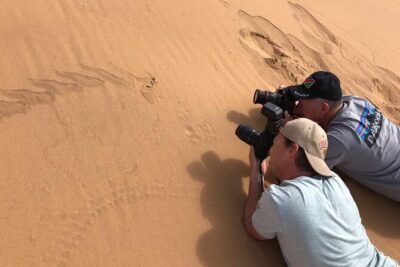
Guides like Hanjo are known for stopping for the smallest tracks and clues. You might see animals directly, but you can also leave with a stronger sense of how desert life moves: reptiles that vanish quickly, birds and insects that leave faint signs, and tracks that look meaningless until someone explains the story.
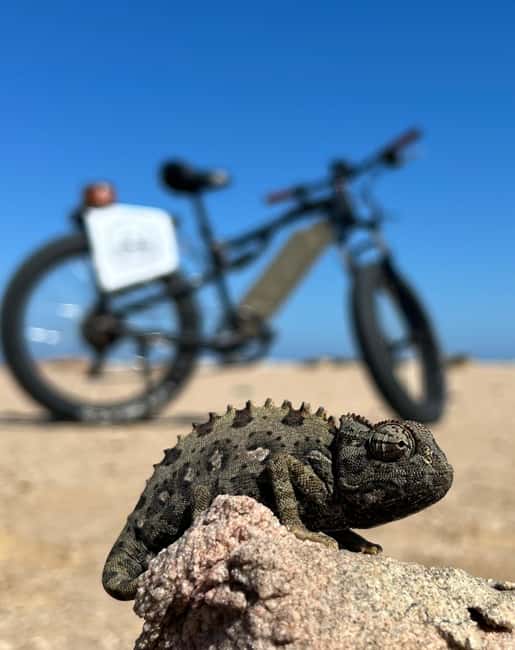
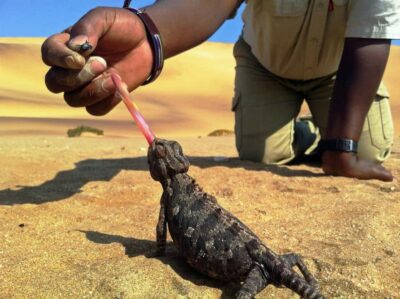
From the sightings and moments shared on these tours, you can end up learning about desert wildlife such as sand vipers, geckos, slow worms, and spiders. There is even mention of hyena track sightings. Chameleons are a standout when you find them, and they can be a true wow moment. At the same time, chameleons are not guaranteed, since the desert is unpredictable and guides cannot force wildlife to appear.
That mix is important. If you come in expecting constant action, you may feel let down. If you come in expecting a thoughtful chase through signs and habitat, the experience clicks.
Also, pay attention to how carefully the guide treats wildlife. Accounts of the guide leaving nocturnal animals undisturbed show that this is not a grab-and-go animal spectacle. It is a learning-focused outing where curiosity stays respectful.
What makes it feel special: dunes, comfort, and a gentle pace
Some tours rush. This one is designed to balance riding with time to look. That balance is a big reason people rate it highly.
A couple of details make the experience feel comfortable even when terrain gets challenging:
- Helmet included, so you can ride without extra gear hunting
- E-assist that helps you keep energy for observation
- Snack included, which matters once you start working harder on dunes
- Small groups, which helps the guide tailor the focus, like spending more time on dunes or focusing more on plants
On one hot day mentioned in feedback, the ride became more exhausting. That is a reminder that “comfortable” is relative in a desert. You will want a smart plan for heat and hydration, especially in warmer months.
Price and value: is $65 worth it?
At $65 per person, this is positioned as a mid-range activity for Swakopmund. The value is strongest when you consider what you get for the price.
You get:
- the e-fatbike
- a helmet
- an experienced guide
- a snack
You do not get:
- water
- transport from and to your accommodation
So the real question becomes: will you enjoy a guided, hands-on desert ride rather than a short sightseeing stop? If yes, the price is reasonable because the guide and bike equipment are the main cost drivers.
Where costs can rise for you is simply logistics. You will need to pay to get to the meeting point, unless you can walk or arrange a simple local transfer. And you will want to plan water, which is not included. That turns a $65 outing into a small overall day cost, but it is still a strong deal for a focused 3.5-hour desert experience.
What to bring, what to wear, and what to skip
The tour asks for comfortable shoes. I agree with that completely. Sand and beach-adjacent terrain can make regular shoes feel wrong fast. If you have shoes with solid grip, even better.
You should also plan your water strategy. Water is not included, but you can buy water or fill a reusable bottle at the office. That means you should show up thinking about hydration, not as a last-minute scramble.
One more practical note: the tour is not suitable for children under 12. That is about safety and the demands of riding over dunes. For families with older kids, it is described as suitable for the whole family, but you still want to match the ride to your child’s comfort level with bikes and sand.
How to decide if this is your kind of desert
This tour fits best if you want an active, nature-focused experience. You will likely enjoy it if you like:
- learning in the field, not just reading a sign
- watching for wildlife signs instead of expecting guaranteed sightings
- short guided adventures where you ride, stop, learn, and ride again
It may not be the best fit if you want a purely relaxed beach stroll. Dunes add effort, and in hot weather the ride can feel tougher than expected. Also, if you hate stopping frequently to look at tracks and plants, you might find the pace a bit slower than a straight trail ride.
Book it or skip it? My honest call
I would book this tour if your ideal Swakopmund day includes a guided ride into the Namib Desert, with frequent stops to understand what you are seeing. The combination of quiet electric fat biking, knowledgeable guidance like Hanjo’s track-reading style, and the chance for standout wildlife moments like chameleons makes it an easy pick for people who enjoy practical learning outdoors.
I would think twice if you are strongly heat-sensitive, unwilling to handle hydration on your own, or traveling with kids under 12. In those cases, you can still enjoy Swakopmund, but this specific experience may not feel worth the effort.
FAQ
How long is the e-fatbike desert tour?
The tour is approximately 3.5 hours long.
What’s included in the $65 price?
The tour includes the e-fatbike, helmet, an experienced guide, and a snack.
Is water provided during the tour?
Water is not included, but you can buy water or fill up a reusable water bottle at the office.
Do I get transport from and to my accommodation?
No. Transport from and to your accommodation is not included.
What should I bring or wear?
Bring comfortable shoes. The tour includes a helmet, but you should still dress for riding and desert conditions.
Is this tour suitable for children?
It is not suitable for children under 12 years.
What booking options and cancellation rules are available?
You can reserve and pay later to keep plans flexible. You can cancel up to 24 hours in advance for a full refund.
More Trips Across Namibia
- Walvis Bay: Marine Big 5 Luxury Catamaran Tour★ 4.8 · 1,012 reviews
- Walvis Bay and Sandwich Harbour Tour★ 4.8 · 483 reviews
- Scenic Sandwich Harbour Tour★ 5.0 · 277 reviews
- Scenic Desert Tour by Bike★ 5.0 · 165 reviews
- Living Desert Eco Dune Tour★ 5.0 · 113 reviews
More Namibia Reviews
- Walvis Bay: Marine Big 5 Luxury Catamaran Tour★ 4.8 · 1,012 reviews
- Swakopmund: Desert Dunes Quad Biking with Optional Sandboard★ 4.9 · 590 reviews
- Walvis Bay and Sandwich Harbour Tour★ 4.8 · 483 reviews
- Scenic Sandwich Harbour Tour★ 5.0 · 277 reviews
- Scenic Desert Tour by Bike★ 5.0 · 165 reviews
The Little Five, More Guides Worth Booking
- Living Desert Eco Dune Tour★ 5.0 · 113 reviews
- From Swakopmund: Living Dunes Experience★ 4.9 · 84 reviews
- Living Dunes Experience from Swakopmund★ 4.5 · 76 reviews
- LIVING DESERT TOUR (Little 5 tour)★ 5.0 · 7 reviews
Other Namibia trips from our own write-ups


The Living Desert & Little Five, all of them.
 ★ 5.0Living Desert Eco Dune TourFrom $60113 reviews
 ★ 4.9Living Dunes ExperienceFrom $6184 reviews
 ★ 4.5Living Dunes Experience from SwakopmundFrom $5176 reviews
 ★ 5.0LIVING DESERT TOUR (Little 5 tour)From $687 reviews
This tour also turns up in