
REVIEW · NAMIB DESERT LANDSCAPES
Full-Day Tour in Namib Desert from Swakopmund, Namibia
7 hours in the Namib feels like time travel. This full-day outing from Swakopmund takes you into Namib Naukluft Park to explore the oldest desert on Earth, where you will also learn why life still clings to the sand and rocks. Expect a guided look at geology, desert plants, and the stark moonscape scenery that makes photos pop.
Two things I really like: the tour is led by a guide who teaches you to notice (not just where to look), and it includes a picnic lunch that turns a long day of driving and exploring into something you actually look forward to. One possible drawback is that this is priced as a guided experience, so if you only want open-ended roaming or lowest-cost transport, you may feel the cost more than the value.
The good news is the structure is built for your time. You start in the morning, head out with a small group, and spend the day focused on what makes the Namib Desert special. Even with limited time, you will leave with a clear sense of the desert’s logic, plus a few standout nature stops you can explain later.
In This Review
- Key highlights you should care about
- Why the Namib Desert day feels different than a generic desert tour
- Getting picked up in the morning, and why the group size matters
- Into Namib Naukluft Park: how the day starts with desert geology
- What to expect during this driving and orientation stretch
- The “moonscape” stop: learning to see plants, rocks, and lichens
- Why Welwitschia is worth building your day around
- Wildlife odds: springbok and klipspringer, and the right mindset
- The picnic lunch that makes the 7 hours feel manageable
- Photography in the rocky Namib: how to get better shots without rushing
- Value and price: is $125.31 per person a fair deal?
- Who this tour fits best (and who might want something else)
- Should you book this 7-hour Namib Desert day from Swakopmund?
- FAQ
- What is the start time for the Namib Desert full-day tour?
- How long is the Namib Desert tour?
- Is pickup offered from Swakopmund?
- How big is the group?
- Is a picnic lunch included?
- Does the tour require an admission ticket?
- Do I need to bring a paper ticket?
- What is the price per person?
- What is the cancellation policy window?
Key highlights you should care about
- Small-group cap (max 7 travelers) for more questions and a less chaotic pace
- Welwitschia focus, including why this living fossil is so closely tied to this region
- Moonscape scenery in Namib Naukluft Park with a guided way to frame what you are seeing
- Picnic lunch included, so you do not burn the day searching for food
- Pickup offered and a mobile ticket to make the day feel simple
- Guides like Hans-Dieter (Kallisto Tours) bring lots of desert know-how to the drive
More slow days across the Namib gravel and dunes
Why the Namib Desert day feels different than a generic desert tour
The Namib Desert is famous because it is old. But the best part of this tour is how it explains what that age means on the ground. You are not just looking at sand. You are learning how this coastal desert formed, and how the local climate shapes conditions for plants and animals that survive where you would expect nothing to live.
That shift in perspective matters. When you understand the why, the scenery stops being a backdrop and becomes a story. The guide points out desert survivors like indigenous succulents and even rare lichens, and it clicks fast that the Namib is not empty. It is just selective.
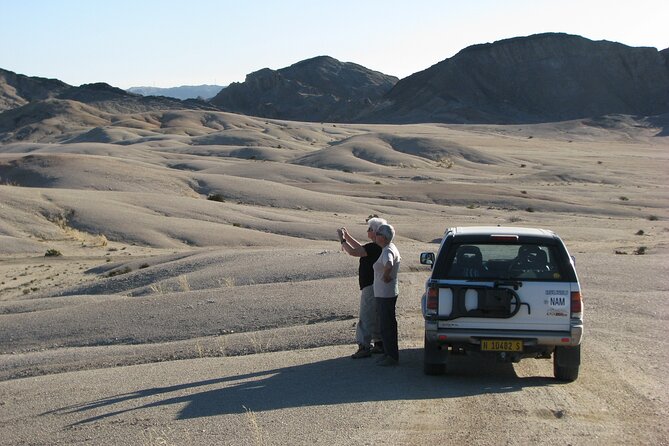
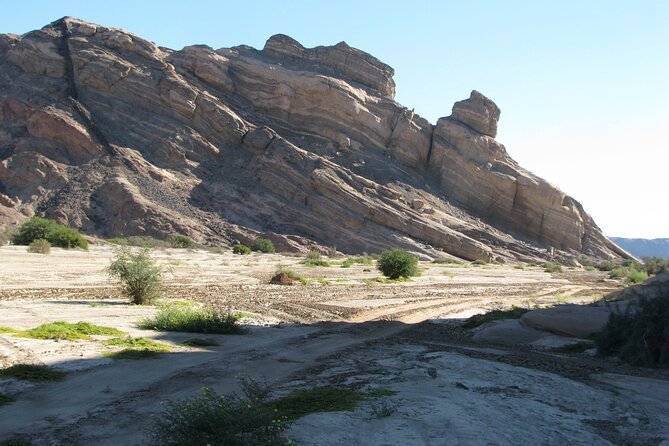
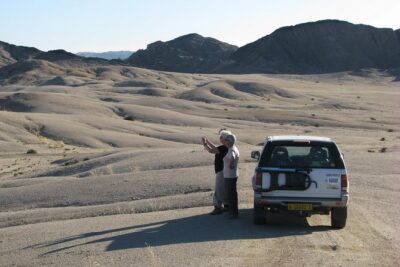
You also get that classic Namibia feeling of scale. Once you leave the Swakopmund area behind, the scenery leans into a rocky, rugged look often described as a moonscape. Even if you have seen desert photos before, this kind of guided framing helps you notice details you might otherwise miss.
Getting picked up in the morning, and why the group size matters
The day starts at 9:00 am. If you are staying around Swakopmund, the pickup option is a big deal because you can focus on the day instead of figuring out parking and getting yourself to the right departure point.
Another practical win is the group limit. This is capped at 7 travelers, which keeps things calm. In a smaller group, you get more back-and-forth time. You can ask questions, and the guide can tailor explanations when someone spots something interesting. One of the best signals from past guests is that questions were answered clearly during the day, and that usually comes from having space to talk instead of rushing everyone through.
The tour uses a mobile ticket, so you are not stuck hunting for printouts. And it is described as near public transportation, which can be reassuring if you are not using a rental car.
Into Namib Naukluft Park: how the day starts with desert geology
Right after you depart, the tour begins by setting context. You will learn about the origin of the Namib Desert and the geological and climatic conditions that make this part of Namibia a coastal desert. That early orientation is smart because it gives you a lens for everything that follows.
Then you transition into the part that feels like a switch flips. As you travel further, you leave the signs of everyday life behind and enter the rocky, rugged scenery known for that moonscape feel. The point is not only visual. It helps you understand why the plants you will see later have adapted the way they have.
This is also where a good guide earns their keep. It is easy to say it is the oldest desert in the world. It is harder to explain how that age and climate show up in what you can spot during your limited hours. On this tour, that explanation is part of the experience flow, not an afterthought.
- Walvis Bay: Marine Big 5 Luxury Catamaran Tour
★ 4.8 · 1,012 reviews - Swakopmund: Desert Dunes Quad Biking with Optional Sandboard
★ 4.9 · 590 reviews - Walvis Bay and Sandwich Harbour Tour
★ 4.8 · 483 reviews - Scenic Sandwich Harbour Tour
★ 5.0 · 277 reviews - Sandwich Harbour Adventure: Seals and Sandwich harbour dune drive
★ 5.0 · 165 reviews
What to expect during this driving and orientation stretch
- A lot of explanation tied directly to what you are passing and seeing
- Stops timed so you can observe plants and terrain without feeling rushed
- The sense that you are being taught how to read the desert
If you are the type of traveler who likes structure, this works well. If you prefer pure spontaneity, you might notice the day is planned tightly around key themes, like plant survival and the moonscape scenery.
The “moonscape” stop: learning to see plants, rocks, and lichens
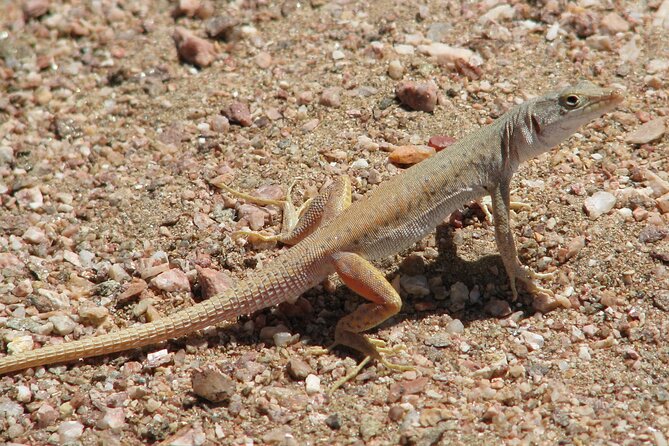
One of the standout features is how much attention goes to life in unlikely places. In the Namib, you will encounter indigenous succulents and rare lichens. These are not just interesting names. They are the visual proof of survival strategies.
Succulents help you understand water storage and slow growth in a harsh setting. Lichens can be a surprise, too, because they show up in places that look too tough for anything. When the guide explains the conditions behind them, they stop looking like random specks and start looking like evidence.
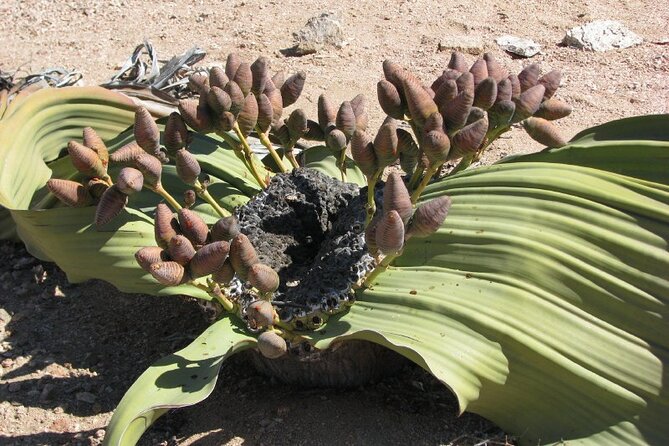
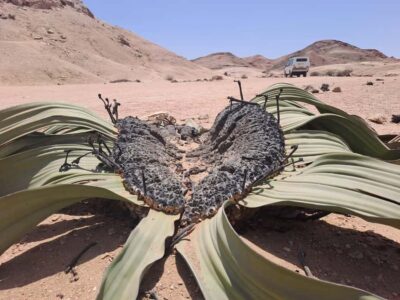
And then there is the real star: Welwitschia. This is described as a living fossil found in this geographical area, and it is a great example of the tour doing more than sightseeing. When you learn the Welwitschia angle, you will start to connect the desert’s age, its isolation, and the way evolution leaves behind survivors that seem almost impossible.
Why Welwitschia is worth building your day around
Welwitschia is one of those plants that people love to photograph, but the tour focus makes it more than a quick snapshot. You learn that it is only found here, and the guide frames why that matters in a world where plant distributions are usually broader.
For me, that is the difference between seeing something and understanding it. When you leave, you can say more than it was cool. You can tell someone why it is special and why you saw it in this desert.
Wildlife odds: springbok and klipspringer, and the right mindset
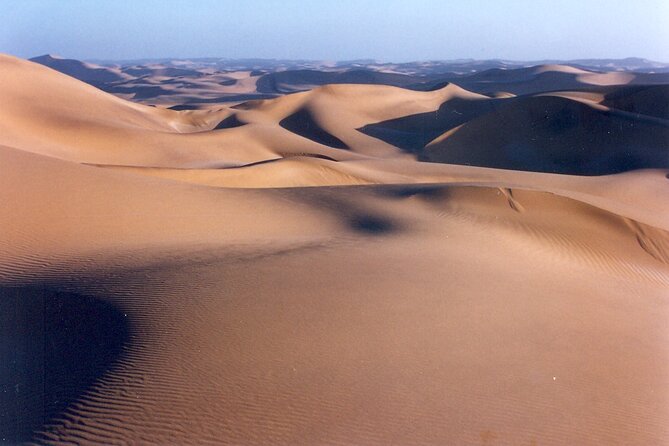
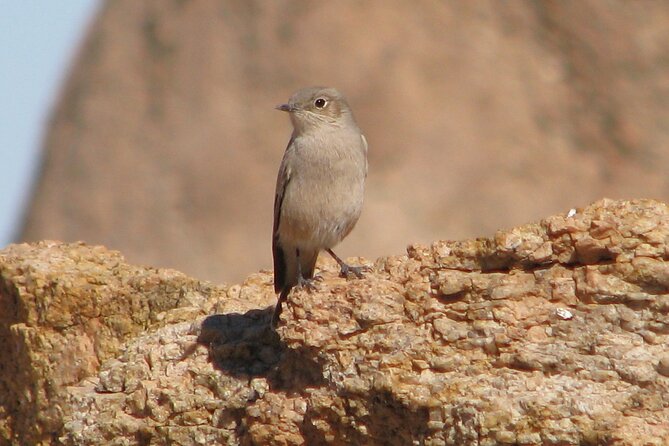
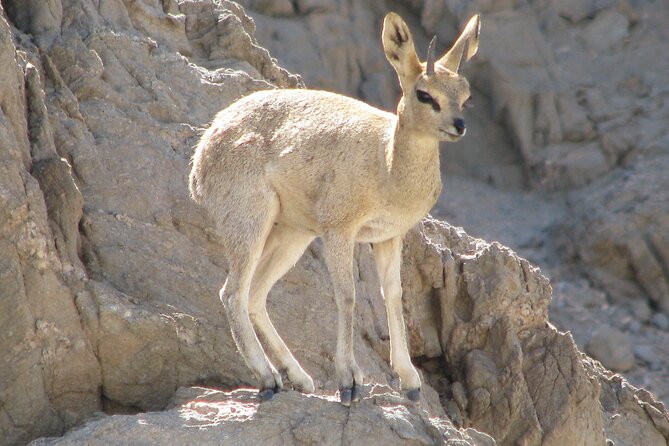
You are not on a guaranteed animal safari. Still, the tour notes that with a bit of luck you might see springbok and klipspringer. That matters because it sets expectations the right way, and it encourages you to stay observant rather than fixated on ticking a box.
Here is the practical mindset that works best on tours like this:
- Watch edges where the terrain changes, not only open spaces
- Expect animals to be brief and distant, then move on
- Use the guide’s pointers instead of scanning randomly
Klipspringer and springbok have a different style from big mammals you might know elsewhere. They are more about spotting movement and silhouettes than guaranteed close-up action. If you keep your eyes on the terrain the guide is referencing, your chances improve simply because you will know where attention is useful.
The picnic lunch that makes the 7 hours feel manageable
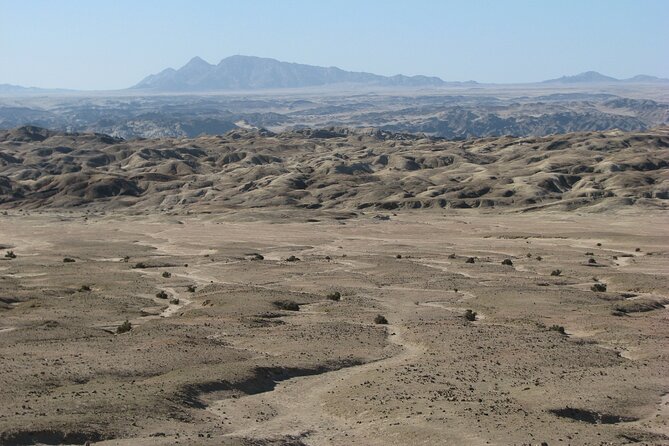
A big selling point is the picnic lunch, and it is mentioned as popular. From a traveler’s point of view, that inclusion is not trivial. In places like the Namib, time and distance can add up quickly. If lunch requires searching or driving on your own, the day starts to wobble.
With a picnic, the tour keeps rhythm. You get a break, you regain energy, and you do not lose the thread of the desert stories the guide has been building. It is also a nice way to slow down for a few minutes in the middle of that moonscape scenery, rather than treating it as nonstop motion.
One note: since your day is around 7 hours, treat this as a full outing rather than a quick add-on. Bring whatever small comforts help you focus, like sun protection, water for after lunch, and a camera-ready layer if you tend to run cool in the morning.
Photography in the rocky Namib: how to get better shots without rushing
The rugged scenery is described as astounding and built for photography. But you will get more from your photos if you shoot with purpose.
A few practical tips that match how this kind of tour runs:
- Photograph Welwitschia with context. If possible, include surrounding rock or plant spacing so the scale makes sense
- For moonscape scenes, prioritize texture. Close-ups of rocks and lichens can look dramatic once you frame them right
- Keep an eye out for guide-led stops. When the guide points to something, that is usually the moment when the light and terrain angle are working
Also, remember you are in a guided format with a small group. If you try to turn every stop into a long solo photo session, you can end up missing the next teaching moment. Instead, take your shots quickly, then listen and learn what you are actually seeing. It makes the photos better and the day more satisfying.
Value and price: is $125.31 per person a fair deal?
At $125.31 per person for about 7 hours, this is not “throw-away” pricing. But it can still be strong value depending on how you like to travel.
You are paying for a few key things that reduce your effort:
- A qualified guide who explains desert geology and how flora and fauna survive here
- The focus on specific desert life, including succulents, lichens, and Welwitschia
- A guided day that includes pickup offered, plus an included picnic lunch
You are also not paying for a separate admission ticket here, since the information states admission ticket free. That helps the math.
If you are the type who wants to self-drive and figure it out alone, you might feel you can do it cheaper. But if you want the Namib translated into plain language, and you want to know what to look for when you are standing in a moonscape, guided time is usually worth it.
The small group size also nudges the value upward. A cap of 7 travelers means you are not sharing the guide’s attention with a huge crowd.
Who this tour fits best (and who might want something else)
This full-day Namib Desert experience fits best if you:
- Want an easy, structured day out of Swakopmund
- Like nature explanations, especially plant survival and desert adaptations
- Prefer small groups where you can ask questions
- Appreciate a planned picnic lunch so the day stays comfortable
It may be less ideal if you:
- Want a completely unscripted, self-paced desert outing
- Are strictly searching for close-up wildlife action
- Are only interested in scenery and not the why behind it
If you are somewhere in the middle, you will probably enjoy it. The best version of this day is part scenery, part learning, and part time to look closer than you would on your own.
Should you book this 7-hour Namib Desert day from Swakopmund?
I think it is a good booking if you want your Namib visit to make sense. The strongest draw is the way the guide connects geology and climate to what you see: succulents, lichens, and especially Welwitschia as a living fossil tied to this region. Add a small group size, pickup option, and a picnic lunch, and you get a day that feels complete rather than rushed.
Book it if you want a guided interpretation-focused desert outing with a calm pace and room for questions. Skip or consider alternatives if you want the cheapest possible transport or you only care about guaranteed wildlife sightings.
If you do book, pack smart for a full day and lean into the guide’s explanations. Your photos will improve, and you will come home with a better story than just I saw a desert.
FAQ
What is the start time for the Namib Desert full-day tour?
The tour starts at 9:00 am.
How long is the Namib Desert tour?
It runs for about 7 hours.
Is pickup offered from Swakopmund?
Yes, pickup is offered.
How big is the group?
The tour has a maximum of 7 travelers.
Is a picnic lunch included?
Yes, a picnic lunch is included and is described as a popular feature.
Does the tour require an admission ticket?
The admission ticket is listed as free.
Do I need to bring a paper ticket?
No, the tour uses a mobile ticket.
What is the price per person?
The price is $125.31 per person.
What is the cancellation policy window?
Free cancellation is available up to 24 hours in advance for a full refund.
More Trips Across Namibia
- Walvis Bay: Marine Big 5 Luxury Catamaran Tour★ 4.8 · 1,012 reviews
- Walvis Bay and Sandwich Harbour Tour★ 4.8 · 483 reviews
- Scenic Sandwich Harbour Tour★ 5.0 · 277 reviews
- Scenic Desert Tour by Bike★ 5.0 · 165 reviews
- Living Desert Eco Dune Tour★ 5.0 · 113 reviews
More Namibia Reviews
- Walvis Bay: Marine Big 5 Luxury Catamaran Tour★ 4.8 · 1,012 reviews
- Swakopmund: Desert Dunes Quad Biking with Optional Sandboard★ 4.9 · 590 reviews
- Walvis Bay and Sandwich Harbour Tour★ 4.8 · 483 reviews
- Scenic Sandwich Harbour Tour★ 5.0 · 277 reviews
- Sandwich Harbour Adventure: Seals and Sandwich harbour dune drive★ 5.0 · 165 reviews
Deeper into the Namib
- Swakopmund: Desert Dunes Quad Biking with Optional Sandboard★ 4.9 · 590 reviews
- NAMIB DESERT TOURS, Full-Day and Half-Day Tours from Swakopmund, Namibia★ 5.0 · 11 reviews
- Swakopmund: Moon Valley and Namib Desert Welwitschia Tour★ 4.7 · 4 reviews
Other Namibia trips from our own write-ups


Namib Desert Landscapes, all of them.
 ★ 4.9Desert Dunes Quad Biking with Optional SandboardFrom $36590 reviews
 ★ 5.0Namib Desert Landscape TourFrom $20220 reviews
 ★ 4.5Cruise liner Special: Swakopmund and Namib Desert HighlightsFrom $19314 reviews
 ★ 5.0NAMIB DESERT TOURS, Full-Day and Half-Day Tours from Swakopmund, NamibiaFrom $7511 reviews
 ★ 4.7Moon Valley and Namib Desert Welwitschia TourFrom $574 reviews
This tour also turns up in