
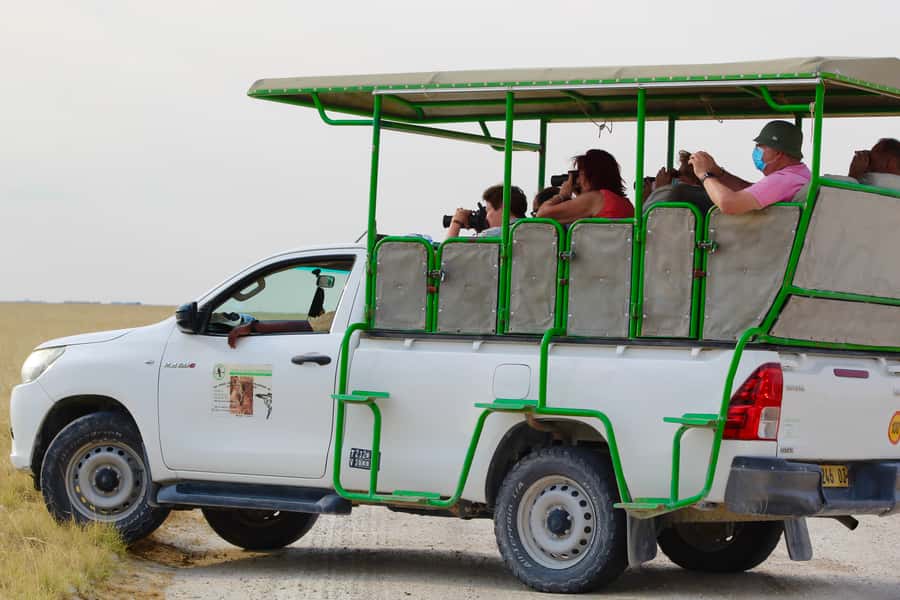
REVIEW · ETOSHA PARK GAME VIEWING
Etosha National Park: Full or Half-Day Game Drive
Etosha does not feel like a zoo. It feels like you are driving through someone’s living memory, and this safari is built for that. I really like the open 4×4 setup for close views, and I also appreciate the warm poncho for those sharp early starts. One drawback to plan around: the route changes daily and there is no guarantee you will see every big animal on your wish list.
What makes this outing hit different is the guide. The person leading your game drive is local, born and raised around Etosha, and the best part of having someone like Ben (or Amone, Matias, and other guides you might be assigned) is that you feel their decision-making in real time. They are constantly adjusting where you go based on what animals are doing and what has been spotted more recently.
The timing matters, too. You start at park opening from Anderson Gate for fewer crowds and better photo light, then you break about an hour around midday inside the park. Do come ready for cold mornings, and remember the park entrance fee is extra, paid in cash on site.
In This Review
- Key Highlights You’ll Feel During the Drive
- First Look at Etosha Game Drives, and Why This One Works
- Getting In: Anderson Gate, Early Entry, and Your Actual Morning
- Open 4×4 Safari Time: How You Get Close Without Rushing
- The Route Strategy: Chasing Current Sightings
- Midday Break Inside the Park: Rest, Eat, Reset
- Afternoon Driving: When the Park Feels Different
- Wildlife Encounters: What You Can Realistically Hope For
- Price and Value: What You’re Paying For
- Who This Safari Fits Best
- Practical Tips That Make a Real Difference
- Should You Book This Etosha Game Drive?
- FAQ
- Where is the meeting point for this safari?
- Is the park entrance fee included in the price?
- Do I get picked up for a half-day safari?
- How long is the safari?
- What vehicle will I ride in?
- What should I bring for the trip?
- Is the warm poncho included?
- What languages are available for the guide?
- Are drones allowed?
- Is lunch included?
Key Highlights You’ll Feel During the Drive
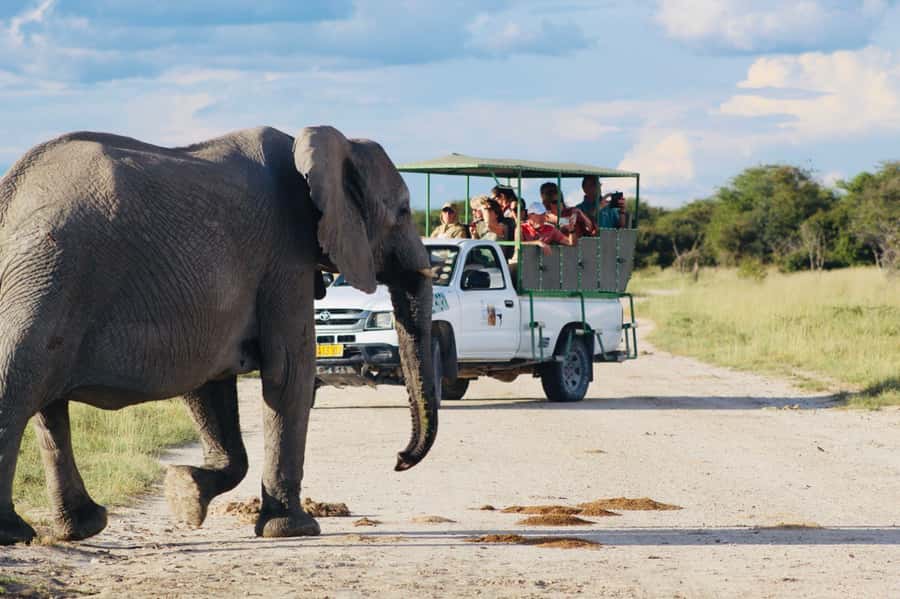
- Start at park opening from Anderson Gate for calmer roads and better early sightings
- Open 4×4 viewing that keeps you close to animals at waterholes and across the flats
- Local, Etosha-born guides who read animal behavior and share stories all day
- Routes that flex daily to chase the best current sightings, not a fixed checklist
- Warm poncho + shared binoculars to help you handle the morning chill and spot more at distance
- A midday stop inside the park so the day does not turn into one long, exhausting stretch
First Look at Etosha Game Drives, and Why This One Works
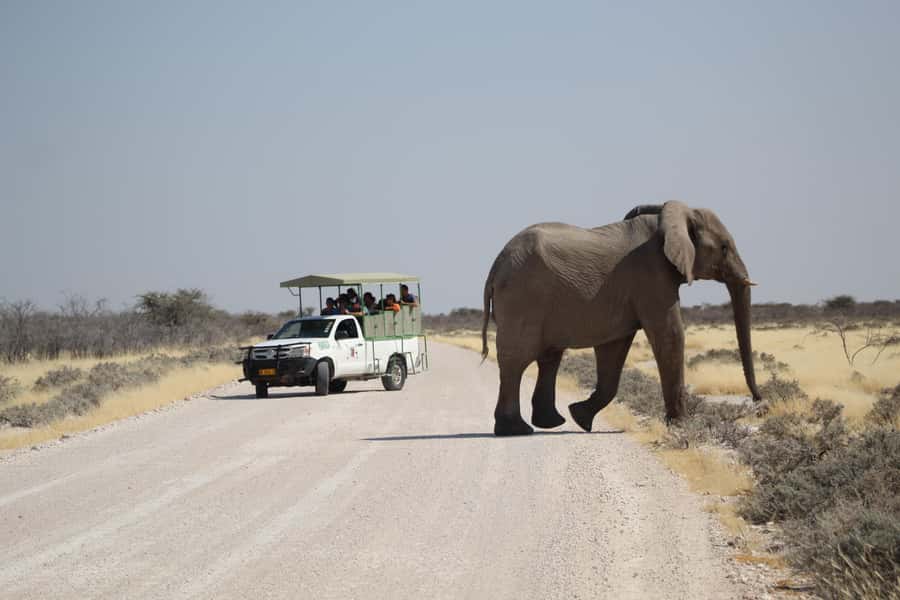
Etosha National Park is famous for wildlife, but the real trick is timing and patience. If you show up later, you often miss the moments when animals are moving for water, feeding, or settling into predictable rhythms. That is why I like that this safari begins around park opening. You get on the road early, before the biggest wave of vehicles piles into the same areas.
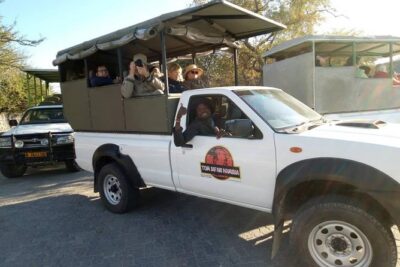
The other thing I like is the vehicle choice. You ride in an open 4×4, which means you are not stuck behind glass and you can track animals as they move. In a park like Etosha, where you might go from seeing plain and dust to spotting a lion at the edge of a pan, the open layout helps you react fast. You also get a real sense of distance, because you can judge size and movement without a screen between you and the scene.
Now the reality check. Etosha is wild. This tour does not promise you will see specific animals on demand. It promises smart guiding, daily route changes, and the best chance of good sightings based on the day’s conditions. If you go in expecting a fixed itinerary with guaranteed results, you will be disappointed. If you go in ready to be flexible, the experience becomes the fun part.
Getting In: Anderson Gate, Early Entry, and Your Actual Morning
Your day centers on Anderson Gate near Okaukuejo. The tour is designed to leave at park opening, and that single detail shapes the whole experience. Earlier vehicles usually find animals before the crowd noise and traffic patterns push them farther off.
If you have your own vehicle, you can park on site for free and drive yourself to the meeting point. The practical advice here is simple: plan to be at Anderson Gate early, and do not underestimate morning prep time. In at least one case, a reviewer mentioned an early pickup from Toshari Lodge in a closed car around 6:55, then switching to the open safari vehicle at the park. That is exactly the kind of common sense you want when the air is cold and you are waiting to climb into an open seat.
Cold mornings are not a small detail in Etosha. Even if you pack for desert sun, the morning chill can bite, especially in the open vehicle with wind. The tour includes a warm fleece poncho, but you should still layer like it is winter practice, not a warm-weather outing.
Open 4×4 Safari Time: How You Get Close Without Rushing
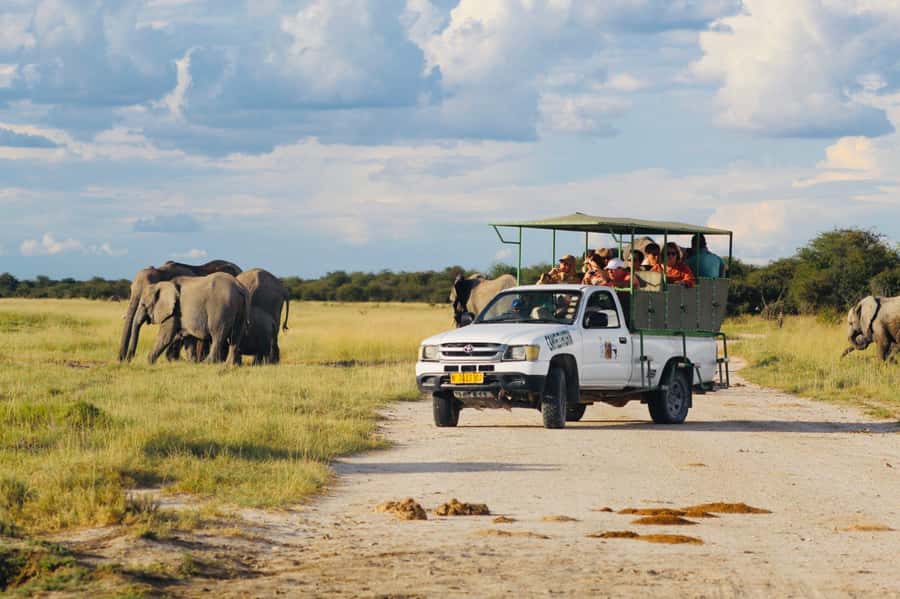
Once you are in the park, this is not a straight line experience. The route is not fixed, and it is adjusted daily based on weather and the latest animal sightings. That means you are not following one checklist from start to finish. Instead, the guide is making calls, deciding where the action is most likely to be, and positioning you for viewing.
This is where the guide’s local experience matters. Many reviews highlight the same pattern: guides are excellent at spotting animals and stopping at the right moment for good viewing, not just for a quick glance. One reviewer credited their guide’s instincts and careful stopping, and another praised the driver’s driving skill and long, appropriate stops.
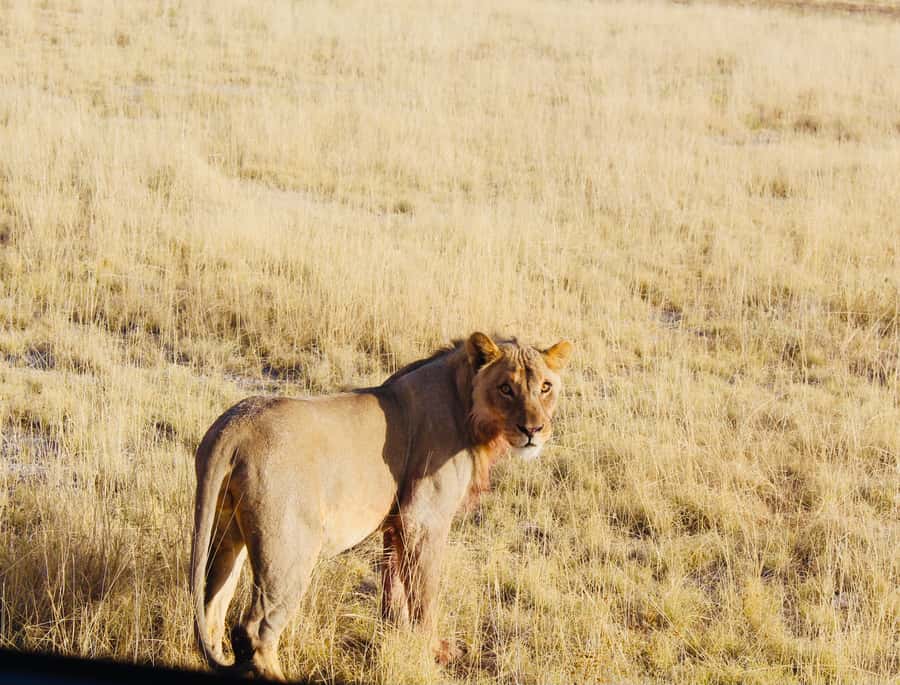
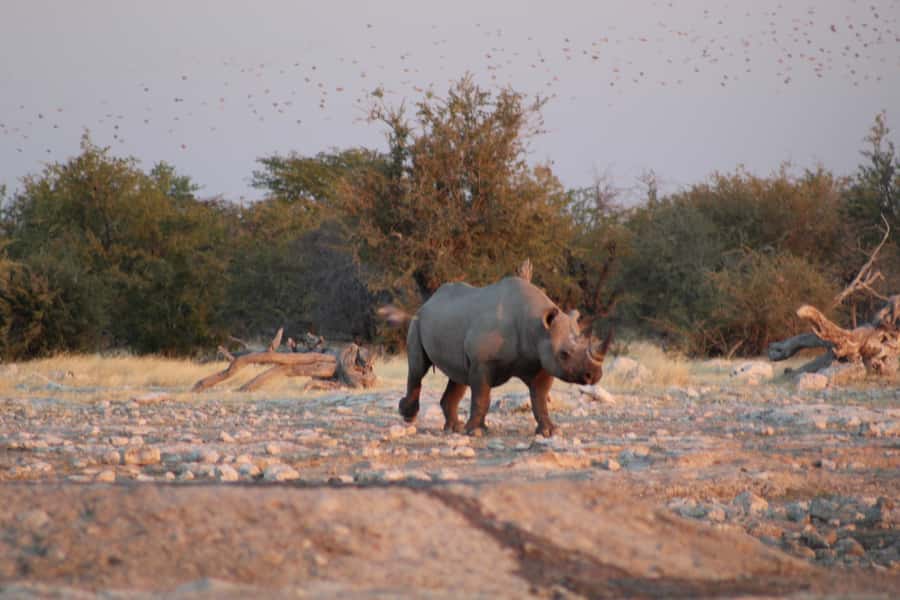
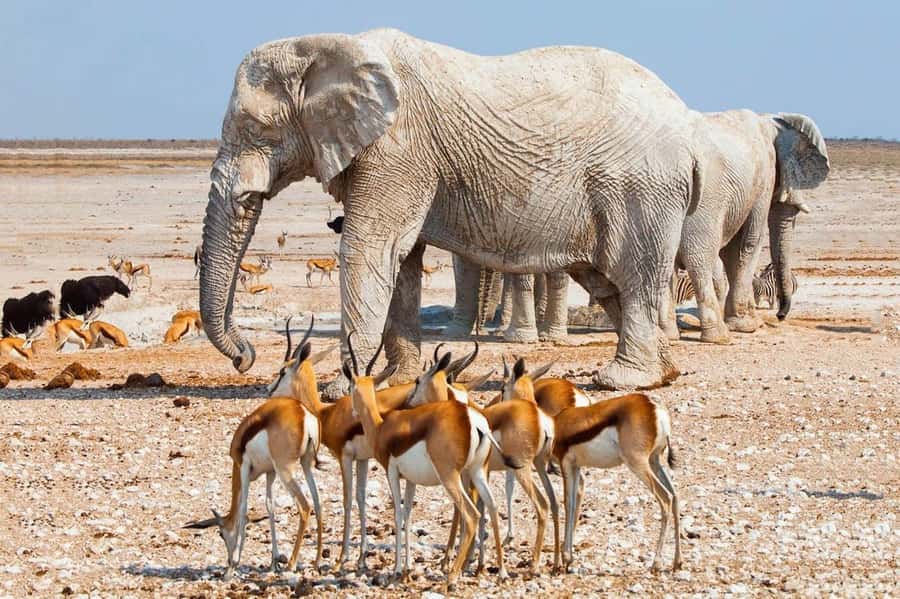
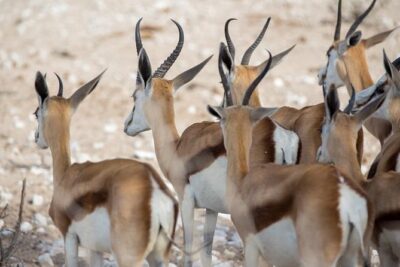
You should also know what you will likely see. The tour is built around Etosha’s signature species such as elephants, lions, giraffes, zebras, rhinos, springboks, and oryx. Sometimes you might also get luck with predators like cheetahs or leopards, but those are bonus sightings, not promises.
Because the vehicle is open, you will feel the wind and dust. That is part of the tradeoff. The upside is that you get a more immediate wildlife encounter. You also get binoculars on board, shared use, which helps a lot when animals are farther out or when you need to scan waterholes and open areas.
The Route Strategy: Chasing Current Sightings
A fixed route sounds efficient, but it often wastes time when the animals have moved. This safari aims to solve that problem by using the day’s information.
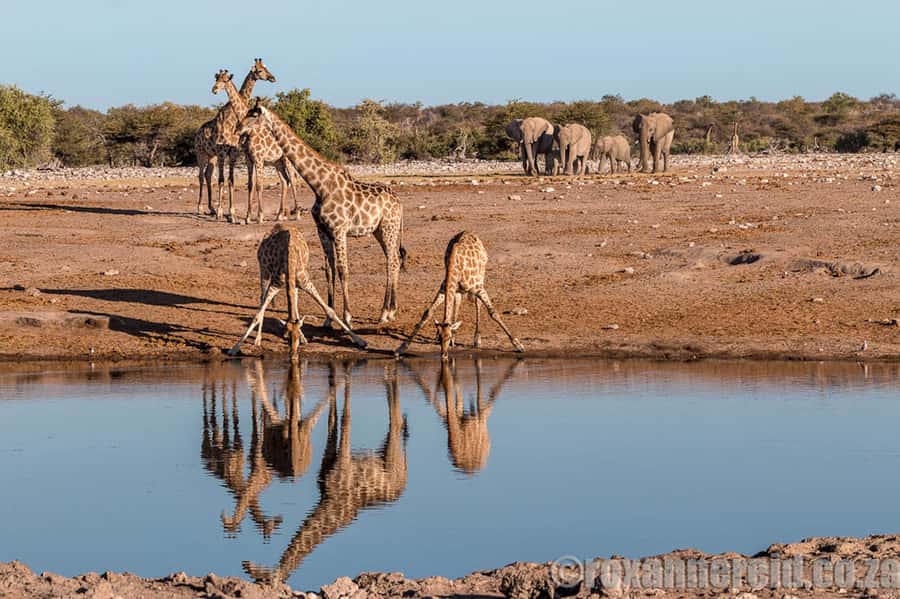
You can think of it like this: Etosha animals shift with water, temperature, and activity. A pride of lions might be resting in one area, then change direction. Elephants might choose one waterhole over another. Birds might be a clue to what is happening nearby, and the guide’s job is to read those signals quickly.
Reviews repeatedly mention that guides stay in contact with other guides, which helps them find animals. Practically, that means you spend less time blindly driving and more time where there is something to see. That is a big deal for value, because time on the road is only fun when it turns into sightings.
Midday Break Inside the Park: Rest, Eat, Reset
The safari includes a one-hour midday break at a restaurant inside the park. This is not just a bathroom and snack stop, it is a reset for your eyes and body. After morning driving, a break helps you stay sharp for the afternoon shift when the light and animal behavior can change again.
Lunch is not included. You can bring your own lunch or eat at the restaurant inside the park. The practical move is to pack something easy if you get picky when you are hungry. Also, plan for drinks: the tour does not include lunch or drinking water, so you should bring water with you.
One reviewer did mention a small mismatch between expectations and reality around water, saying their guide provided at least one bottle even though water was not listed as included. I would not count on that. Treat your own water as the plan, not a maybe.
Afternoon Driving: When the Park Feels Different
In Etosha, afternoon can feel like a different park. The air warms, animals change their movement patterns, and the roads feel busier as people return from midday stops. This safari keeps driving after lunch, so you get more than one chance at animal encounters.
Because the route keeps adapting, the afternoon can surprise you. You might circle back to areas where animals were active earlier, or you might be redirected toward a fresh sighting. That is exactly why this kind of safari is more enjoyable than a rigid tour schedule. You are riding with a guide who can adjust instead of forcing the day to match a script.
Reviews mention a mix of big sightings and classic wildlife moments, from elephants at waterholes to big cats like lions and occasional cheetah sightings. Even if you do not get a rare predator, you still tend to leave with that “we saw a lot” feeling because the guide keeps you moving to what is actually happening.
Wildlife Encounters: What You Can Realistically Hope For
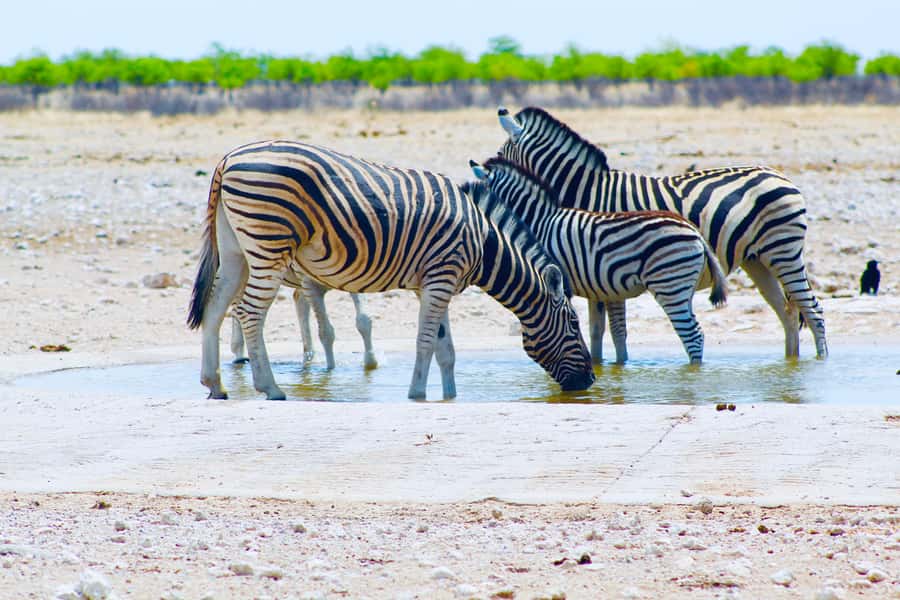
I want you to go in with a balanced expectation. This is a great chance to see a lot of wildlife, including the famous species listed by the tour. Reviews back that up strongly, with many people describing multiple animal types, not just one lucky stop.
Still, predators are unpredictable. Some days the animals are active and visible, and other days they stay farther off or choose shade and distance. Guides can improve your odds with smart positioning and quick decisions, but they cannot control nature.
If your priority is big cats, the early start is your friend. Lions and other predators often make for better sightings when you catch the day right, and several reviews described strong predator encounters, including lions seen early.
If your priority is elephants and general wildlife variety, you are in a strong position with the flexible route. Etosha is built around water, and elephants and many other animals use the same logic.
Price and Value: What You’re Paying For
The safari price is listed as $123 per person, with a duration of 5 to 10 hours. That range usually signals that you can be on either a half-day or full-day format, depending on your booking. Either way, the big value piece is not just the vehicle and guide, it is the daily route flexibility and the local know-how.
One more cost matters: the Etosha National Park entrance fee is NAD 150 per person, paid in cash on site. That is separate from the safari price, and it is worth budgeting for early. If you plan to compare this trip to cheaper options, do the math with the entrance fee included.
Also keep in mind that the tour includes fuel costs, binoculars, and a warm poncho. Those are small line items, but they reduce hassle, and hassle is real money when you are traveling with limited time.
If you are deciding between a basic self-drive game drive and a guided day, a guided safari typically saves you time and helps you spot more. This tour’s reviews repeatedly praise the guide’s ability to position the vehicle safely and effectively, and to find animals through good awareness of what is happening around the park.
Who This Safari Fits Best
This is a strong match if you want:
- A guided day that feels active and decision-based, not just “drive and hope”
- An open vehicle experience focused on wildlife viewing
- A guide who knows Etosha and can share practical explanations while you wait for animals to appear
- A full or half-day format that works with your schedule
It is also a good fit if you travel with mixed interests. One person might focus on elephants and waterholes, another on lions, and another on learning the ecosystem. Reviews mention guides who answer questions and share animal behavior and Namibia context, which tends to satisfy both nature lovers and casual sightseers.
If you dislike cold weather, be honest with yourself. The morning start is a core part of the experience. You can manage it with warm layers and the poncho, but it will still feel cold in an open vehicle.
Practical Tips That Make a Real Difference
Pack like a winter morning is part of the plan, even if you are used to warm climates. Bring:
- Warm clothing (layers beat one thick jacket)
- A windbreaker
- Water
- Cash for the park entrance fee (NAD 150 per person)
- Binoculars if you have your own, though the safari provides shared binoculars
A couple more “save your day” notes:
- Drones are not allowed.
- If you are booking something tied to pickup from inside the park area, there are rules about meeting at Anderson Gate based on clearance. The safest assumption is that you may need to be at Anderson Gate unless your pickup is confirmed for your specific lodge situation.
Should You Book This Etosha Game Drive?
If you want the best chance at lots of sightings, the timing from Anderson Gate and the daily route flexibility are the main reasons to book. I also think the open 4×4 plus the local guide factor makes it feel more authentic and more “in the moment” than a generic safari.
Book it if you:
- Plan to take cold mornings seriously with warm layers
- Like wildlife that comes in and out of view as you follow the day’s activity
- Value a guide who can find animals and explain what you are seeing
Skip it or choose another style if you:
- Need guaranteed sightings of specific animals
- Hate cold weather enough that open-vehicle wind will ruin the day
- Do not want to handle the extra entrance fee in cash
Overall, this is a strong Etosha option because it focuses on the two things that matter most in a park like this: being there early, and letting the guide chase the day’s real opportunities.
FAQ
Where is the meeting point for this safari?
You meet at the entrance of Etosha National Park at Anderson Gate, with free parking on site.
Is the park entrance fee included in the price?
No. The Etosha National Park entrance fee is NAD 150 per person and is paid on site in cash.
Do I get picked up for a half-day safari?
No pick-up is included for half-day bookings. You must meet directly at Anderson Gate.
How long is the safari?
The duration is listed as 5 to 10 hours, depending on your chosen option and starting time.
What vehicle will I ride in?
You ride in an open 4×4 designed for wildlife viewing.
What should I bring for the trip?
Bring warm clothing and a windbreaker, plus water, and cash for the park entrance fee. Binoculars are also recommended (binoculars are available on board as shared use).
Is the warm poncho included?
Yes. A warm fleece poncho is provided for cold mornings.
What languages are available for the guide?
The guide is available in English and Afrikaans.
Are drones allowed?
No, drones are not allowed.
Is lunch included?
Lunch is not included. You can bring your own lunch or eat at the restaurant inside the park during the planned midday break. Drinking water is also not included.
Etosha Park Game Viewing, all of them.
 ★ 5.0ETOSHA PARK SAFARI with local guides in 9-seater 4x4sFrom $12787 reviews
 ★ 5.03 Day Etosha Budget Camping SafariFrom $63437 reviews
 ★ 5.06 Day Sand, Sea & Etosha Budget Camping SafariFrom $1,35536 reviews
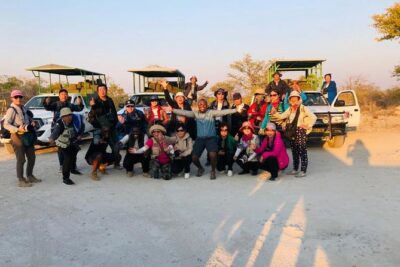 ★ 5.0Safari in Etosha national park with professional tour guides born in Etosha.From $12732 reviews
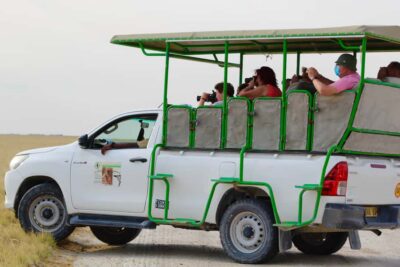 ★ 4.6Etosha National Park: Full or Half-Day Game DriveFrom $17122 reviews
 ★ 5.09 Day Etosha, Skeleton Coast and Sossusvlei Camping and Lodge SafariFrom $2,56821 reviews
 ★ 4.54-Day Etosha And Swakopmund Accommodated Adventure from WindhoekFrom $1,29819 reviews
 ★ 5.0Etosha Express Safari 3 Days / 2 NightsFrom $1,04511 reviews
This tour also turns up in